
The UK has faced a persistent Islamist terrorist threat, but recent successful attacks have predominantly involved lone actors or small groups using relatively accessible methods. A coordinated operation involving multiple vehicles against a strategically important US military facility would represent a significant departure from that pattern. There is, however, an important complication: Iran itself has used Islamist and criminal networks as intermediaries. The question therefore is not necessarily "Iran or jihadists".
There is a particular thrill in a story that arrives fully formed. White vans in a wood at first light. A bomb-disposal robot creeping towards them, filmed from above. Controlled detonations rolling across the Gloucestershire fields, homes evacuated, a US Embassy security alert, and at the centre of it all, a British airbase from which American bombers are flying against Iran. A novelist who pitched this would be asked, gently, whether it was a touch much.
Yet the first act really happened.
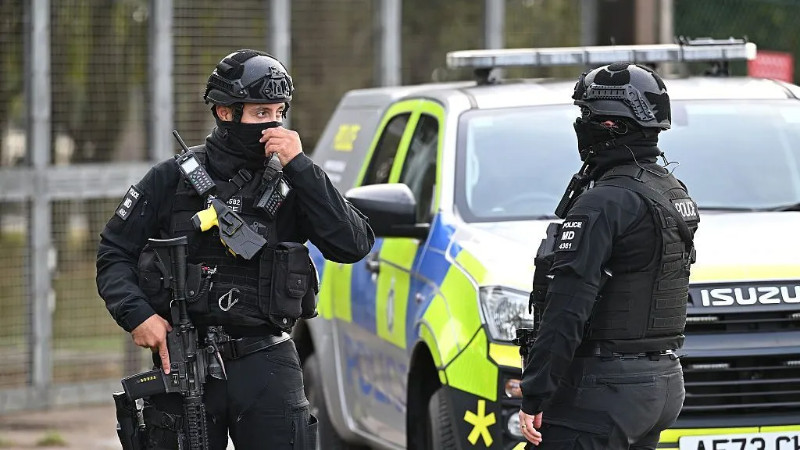
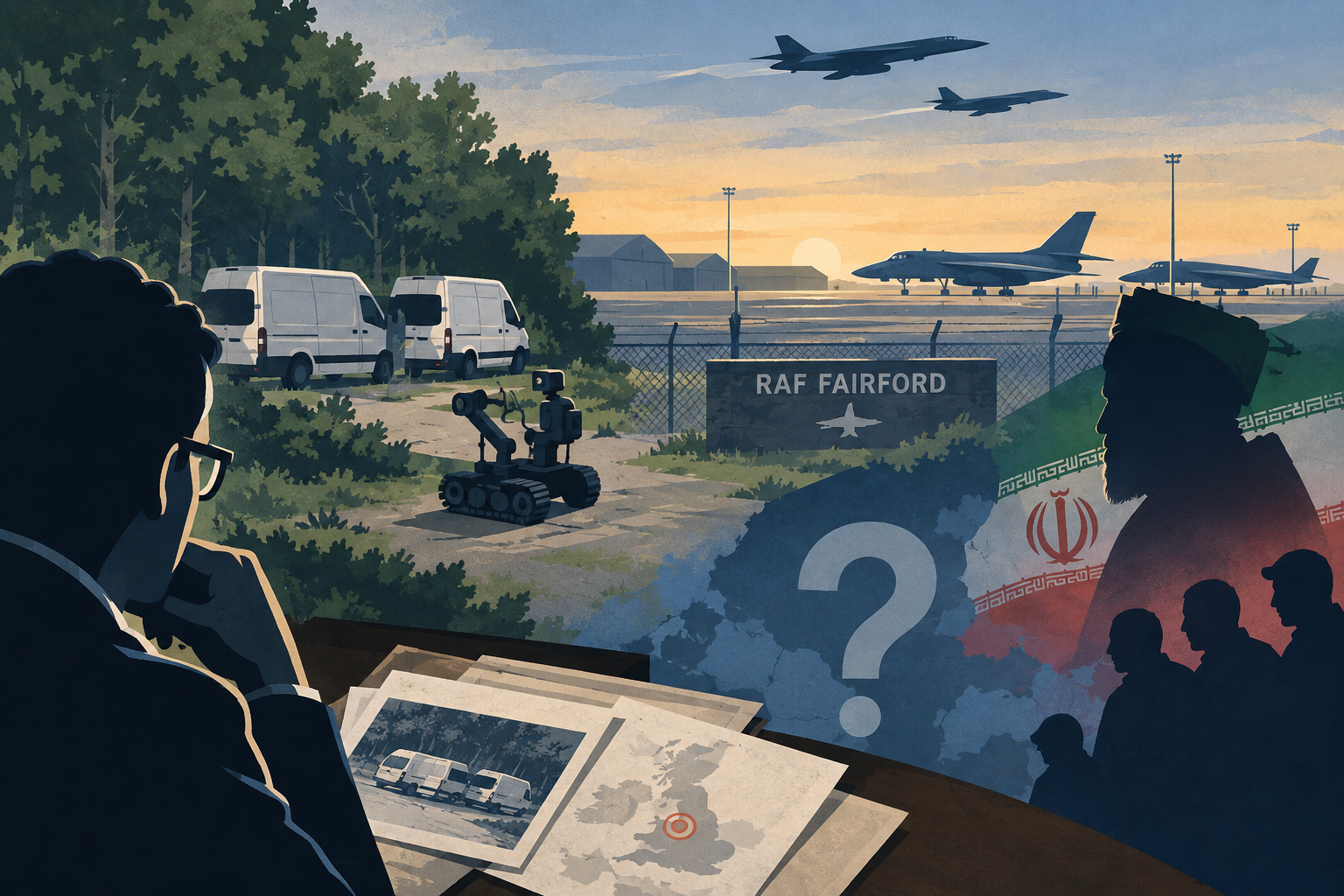
In the early hours of September 27, reports of three suspicious vehicles heading towards RAF Fairford in Gloucestershire triggered a major security response. A major incident was declared. Bomb-disposal teams were deployed. Aerial footage showed a remotely operated robot approaching white vans parked in woodland. Controlled explosions were reported near the perimeter, dozens of homes were evacuated, and five men were arrested on suspicion of preparing a terrorist act and explosives offences.
That alone makes this a serious incident.
But then the story, particularly its second act, began moving in different directions. The suspects, reportedly British citizens from London in their twenties, were released on bail. That does not mean the investigation has collapsed, nor does bail amount to an acquittal. It simply means that the legal process has not established what the men intended to do, what the objects found near the vehicles were, or whether the vehicles were in fact configured as explosive devices. Investigators have not publicly established all of those facts.
And that distinction matters.
Fairford is not an ordinary airfield. It is one of the most strategically significant US military facilities in Britain. The base has been used by US B-1 bombers in operations against Iran and serves as a forward operating location for US Global Strike Command. A credible attack against it would therefore represent something considerably more consequential than an isolated act of vandalism or protest. It would demonstrate an attempt to reach infrastructure directly connected to an ongoing military campaign.
That is precisely why attribution matters.
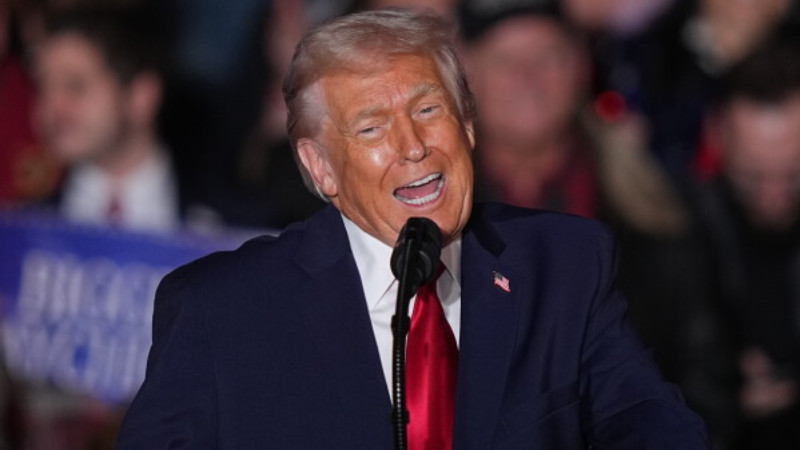
The political narrative moved considerably faster than the evidence. President Trump linked the incident to Iranian agents arriving in small boats before police had publicly established the nationality or background of the suspects. Secretary of State Marco Rubio referred to a "foreign actor". Trump also suggested that Washington and London had been investigating the suspects for some time, a claim on which British authorities have not publicly elaborated.
None of this proves that the Iranian hypothesis is wrong. In fact, there are good reasons for taking it seriously. In July, the Islamic Revolutionary Guard Corps warned that UK bases used by the United States to conduct attacks against Iran could be considered legitimate targets, specifically referring to US bomber operations from RAF Fairford. In September, the IRGC again warned that Iran could broaden the range and nature of its targets if the conflict escalated. These statements establish a direct Iranian threat against the type of facility involved.
There is also a broader pattern. MI5 Director General Sir Ken McCallum said in October 2025 that MI5 and Counter Terrorism Policing had responded since January 2022 to 20 Iran-backed plots presenting potentially lethal threats in Britain. He has described Iran as increasingly crossing the boundary between traditional state activity and terrorism.
Iran has also demonstrated a willingness to use intermediaries. A series of attacks against Jewish and Israel-linked targets in Britain and elsewhere between March and May this year was claimed under the name Harakat Ashab al-Yamin al-Islamia, or HAYI, which has been assessed as potentially serving as a deniable front for Iran-linked actors. The significance is not simply that Iran has enemies in Britain. It is that Tehran has demonstrated an established interest in operating through third parties, allowing it to project force while retaining distance from the operation.
So an Iranian connection is not a wild theory. But a plausible motive is not proof of responsibility. That distinction is becoming increasingly difficult to maintain in an environment where governments, intelligence services, politicians and social media all compete to establish the first version of a story. The Fairford incident sits directly at the intersection of two particularly powerful narratives: the expanding confrontation between Iran and the West, and the growing concern about state-sponsored activity on British soil.
 Other explanations are less compelling on the information currently available, but they cannot simply be discarded.
Russia has demonstrated a sustained willingness to conduct covert sabotage across Europe, including arson, espionage and attacks on infrastructure. But the apparent targeting of a US-operated military facility with multiple explosive devices would be different from the predominant Russian approach seen in recent years. Moscow has generally sought to cause disruption while maintaining deniability and avoiding a level of escalation that could trigger direct confrontation with the targeted state.
An independent jihadist operation is also difficult to reconcile with what Britain has experienced in recent years. The UK has faced a persistent Islamist terrorist threat, but recent successful attacks have predominantly involved lone actors or small groups using relatively accessible methods. A coordinated operation involving multiple vehicles against a strategically important US military facility would represent a significant departure from that pattern. There is, however, an important complication: Iran itself has used Islamist and criminal networks as intermediaries. The question therefore is not necessarily "Iran or jihadists". An operation could theoretically involve an Iran-linked state apparatus, local criminal actors, and an Islamist-facing entity without the perpetrators fitting neatly into any single category.
Also Read: Read All the articles from Hard(ikar) Talk here.
This is where the Fairford story becomes more interesting than the simple question of "who did it?"
Because there are really three separate questions.
First: Were the vehicles intended to facilitate an attack?
Second: Who organised or directed the activity?
Third: What strategic objective would an attack have served?
Those questions should not be collapsed into one.
The first concerns the evidence at the scene. The second concerns attribution. The third concerns motive. A government can be correct about one and wrong about another.
And there is a strategic reason to be particularly careful.
A hostile state does not necessarily need to destroy an aircraft or penetrate an airbase to achieve an effect. Creating fear around a military facility can itself impose costs. It can force additional security measures, disrupt operations, consume police and military resources, unsettle nearby communities and create political pressure around the use of British territory for foreign military operations. That does not mean the incident was staged or that no attack was intended. It means that impact should not be measured only in casualties or physical destruction.
For Iran, if Iranian involvement were eventually established, the strategic value could extend beyond damaging RAF Fairford itself. A successful attack could demonstrate reach, impose costs on an adversary, threaten the credibility of Britain's ability to host US operations and potentially complicate the political relationship between London and Washington.
But the reverse is also true.
An incorrect attribution can serve an adversary just as effectively.
If Britain or the United States prematurely attributes an incident to Tehran and subsequently has to retract or qualify that assessment, Iran gains an opportunity to portray the West as reckless or politically motivated. If Russia is responsible, Moscow benefits from the confusion. If the perpetrators are independent extremists, an early geopolitical attribution obscures the actual threat. And if the incident was fundamentally different from what initial images suggested, the entire debate can become detached from the evidence.
Readers in India will recognise the reflex.
When a major attack happens at home, official statements and television studios have often named a guilty country and demanded a response long before an investigation has produced evidence capable of surviving serious scrutiny. Washington's instinct is not fundamentally different. The language is different; the strategic environment is different; the consequences are potentially much greater. The government that speaks first does not necessarily know the most.
John le Carré understood this instinct particularly well. His spies operated in a world where intelligence was fragmentary, sources had agendas, and the most dangerous information was often the information everyone wanted to believe. George Smiley rarely solved a problem by announcing the answer before the evidence was assembled. His advantage was precisely the willingness to sit with uncertainty.
That lesson matters at Fairford.
- Vinay Hardikar
vinay.freedom@gmail.com
(The writer has been working in the public sphere of Maharashtra for the last five decades. His versatile personality has several dimensions, but the primary ones remain to be that of an established writer, journalist, editor, critic, activist, and teacher.)
Tags: international poilitics terrorism terror attack explosion islamic fanatics millitant organizations jihadist iran uk us terrorist attack Load More Tags
































Add Comment