
On 16 May, Abhijeet Dipke posted the first message under the name “Cockroach Janata Party”. In that satirical and ironic social media post, he declared that the party would represent “lazy and unemployed youth” and those who spend half their day on screen time. The party’s agenda included several forceful demands, such as ensuring not merely 33 percent but 50 percent reservation for women in legislatures and Parliament, and imposing a twenty-year ban on elected representatives who switch political parties. Over the next four days, more than fifty satirical posts by using colour, caricature, images, music, and AI-generated content were uploaded on the social media account. They became extraordinarily viral. Within just four days, the number of followers crossed twenty million.
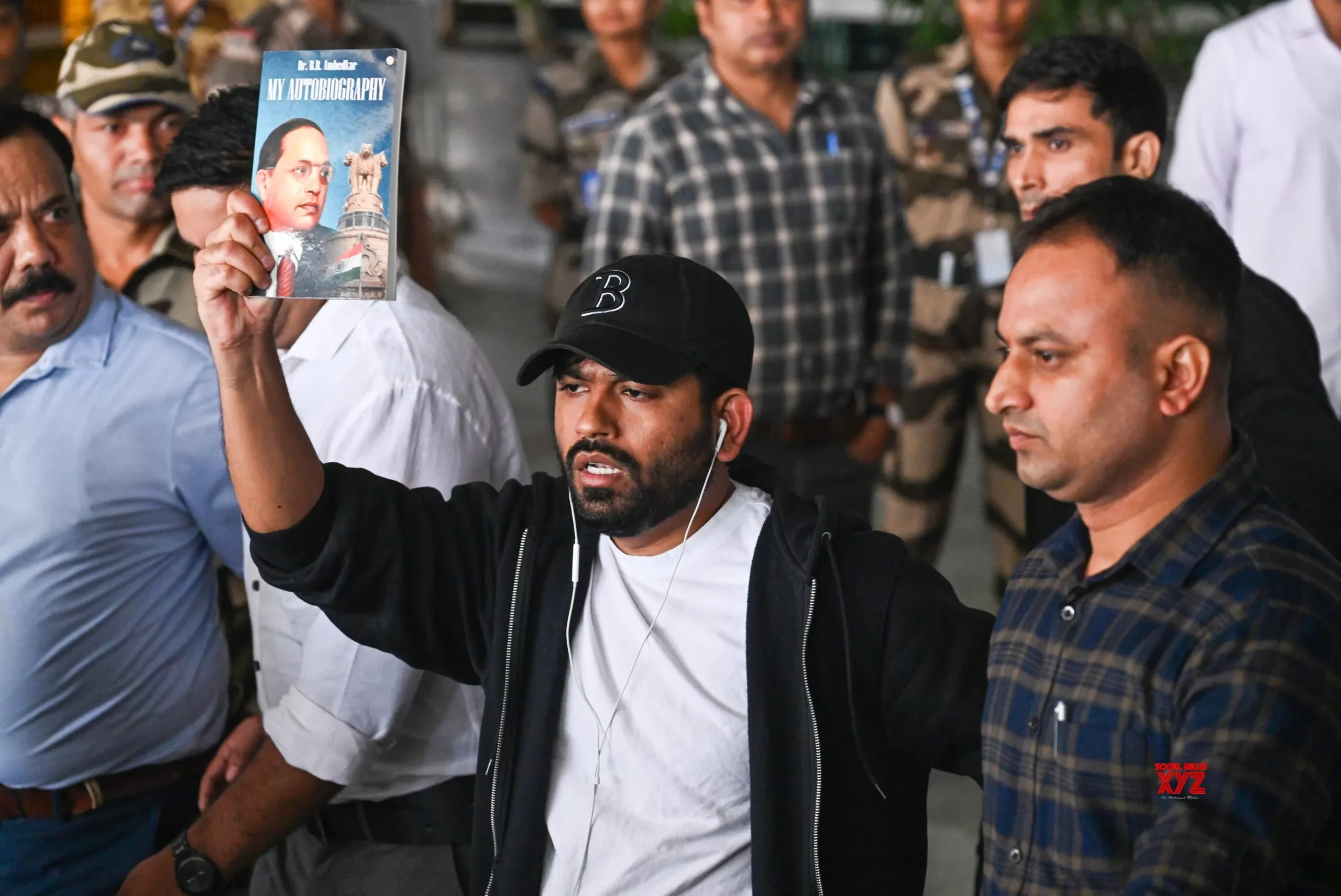
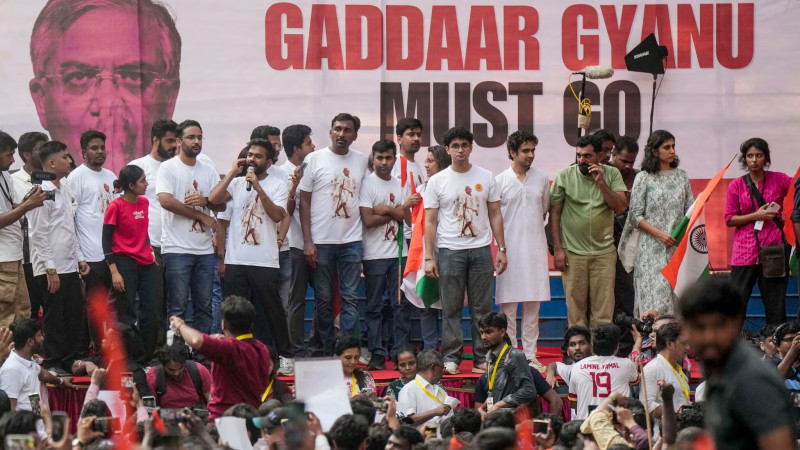
On Saturday, 6 June, at 11 a.m., when the young man Abhijeet Dipke emerged from Delhi Airport under police security, he was holding a book by Dr. Babasaheb Ambedkar in his hand and repeatedly uttering a single sentence before members of the media: “The Education Minister must resign, five students have committed suicide.” From there, he proceeded towards Jantar Mantar. The Cockroach Janata Party (CJP) was scheduled to hold a protest there, as permission had been granted by the Delhi Police.
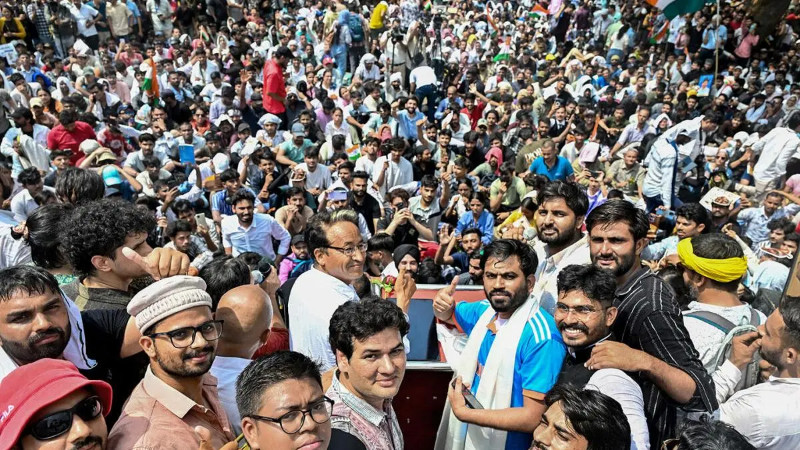
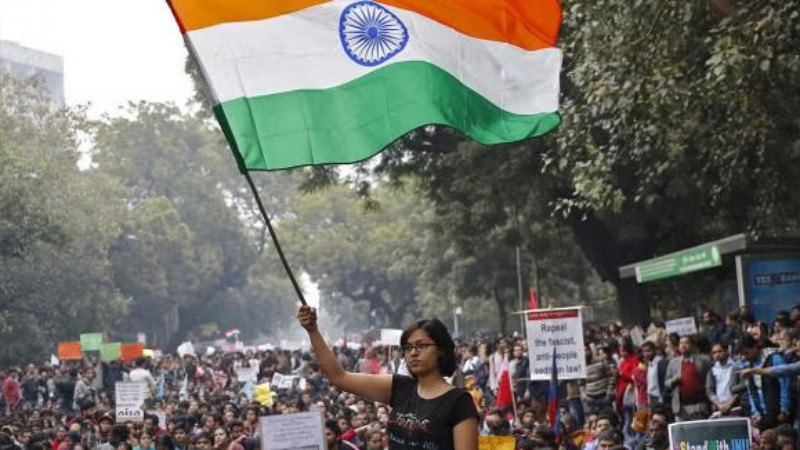
The CJP had appealed for the protest to be conducted peacefully and non-violently. The appeal also urged young people attending the protest to bring along the Indian tricolour and a book, and, if possible, flowers for the police. Responding to this call, thousands of young men and women made their way to Jantar Mantar from all parts of Delhi. As a result, hundreds of police personnel were deployed at various locations. The principal demand of the protest was that Union Education Minister Dharmendra Pradhan should resign. The demonstration lasted the entire day. Slogans were raised and speeches delivered throughout. Sonam Wangchuk, one of the prominent social leaders and activists participating in the protest, also addressed the gathering. As expected, no representative of the government came to meet the protesters, nor was any assurance offered. Television channels largely ignored the protest. However, many YouTube channels took considerable notice of it. Some YouTube channels that openly support the BJP attempted to create confusion by presenting distorted or inaccurate reports. Certain sections of the media, which habitually remain on the sidelines, raised doubts and suspicions. On the other hand, some media outlets sympathetic to the movement expressed excessive and unrealistic expectations. At the end of the day, the central government was given seven days to secure the resignation of the education minister. It was announced that if the resignation did not materialise, a larger protest would be organised the following Saturday. Therefore, what happens next will become clear in the coming week. Nevertheless, it is possible to discuss and analyse the background and perspective of this protest here.
Barely three weeks earlier, on 14 May 2026, during a court hearing, the Chief Justice of India, Surya Kant, made certain sweeping remarks about today’s younger generation. He stated that today’s youth are lazy, unemployed, parasitic, and so on; that they spend hours on social media and keep using laws such as the Right to Information Act to engage in various activities against the system. He even remarked that their condition was akin to that of cockroaches. (He later attempted to clarify his comments, but that made little difference.) When these remarks were reported in the media the following day, no thoughtful and sensitive citizen found them appealing. Yet very few people publicly reacted. One reason was that the statements had come from the Chief Justice of India, leading many to think, “Why should we comment on them?” Another section of society remained silent because they felt there was little point in placing great expectations on India’s judiciary at present. Since the retirement of Chief Justice Dhananjaya Chandrachud, a year and a half earlier, those expectations had declined sharply. During the preceding two or three years, Justice Chandrachud had raised public expectations of himself to extraordinary heights, only to disappoint them equally dramatically in the final six months of his tenure. At that time, millions of Indians felt that the office of the Chief Justice of India had undergone an unprecedented devaluation. Naturally, little was expected from the two Chief Justices who followed him – Justice Sanjiv Khanna and Justice Bhushan Gavai. Each served for only six months. Neither of them did anything particularly harmful, but neither did anything that inspired admiration either. Consequently, when Justice Surya Kant became Chief Justice, no one expected much from him (given his earlier record). Most people assumed that he too would simply come and go. However, his casual remarks about the youth were widely perceived as complementing the conduct and high-handedness of the Narendra Modi government at the Centre. At a time when public unease within Indian society had already reached significant levels, these remarks proved explosive. They became an excuse for a spark that ignited a much larger outburst. In response, a young man named Abhijeet Dipke posted a satirical message on social media in a spontaneous and light-hearted manner. Declaring, “Yes, we are like cockroaches,” he announced the formation of the “Cockroach Janata Party.”
Abhijeet, originally from Chhatrapati Sambhajinagar in Maharashtra, is now in his thirties. After completing a bachelor’s degree in Mass Communication in Pune, he spent three years in Delhi working for the Aam Aadmi Party. For the past one and a half to two years, he has been pursuing a postgraduate degree in Mass Communication at Boston University in the United States. It was from there that, on 16 May, he posted the first message under the name “Cockroach Janata Party”. In that satirical and ironic social media post, he declared that the party would represent “lazy and unemployed youth” and those who spend half their day on screen time. The party’s agenda included several forceful demands, such as ensuring not merely 33 percent but 50 percent reservation for women in legislatures and Parliament, and imposing a twenty-year ban on elected representatives who switch political parties. Over the next four days, more than fifty satirical posts employing colour, caricature, images, music, and AI-generated content were uploaded on the social media account. They became extraordinarily viral. Within just four days, the number of followers crossed twenty million. This led to widespread discussion that even the Bharatiya Janata Party, which claims to be the world’s largest political party, did not possess such a large following on social media. Soon, a BJP-versus-CJP narrative began to take shape, encouraged further by opponents of the BJP.
Fearing the consequences if the phenomenon continued to grow, the central government reportedly ordered the account to be shut down on the fifth day itself. The move created a major stir. Abhijeet, still in the United States, began receiving requests for interviews from Indian media organisations. Tirelessly and with remarkable patience, he gave a spate of interviews to Marathi, Hindi, and English-language media outlets. As a result, both CJP and Abhijeet Dipke remained subjects of intense discussion across the country for the following two weeks. Coming from an ordinary middle-class family, Abhijeet openly stated that he belonged to the Dalit community and that he advocated the kind of society and system envisioned by Dr. B. R. Ambedkar. This further increased public affection and goodwill towards him across the country. Perhaps for the same reason, the RSS-BJP establishment found itself compelled to adopt a defensive posture. With every interview, Dipke increasingly came across as calm, composed, thoughtful, and cultured. Observers also began to notice the strength and clarity of his ideological grounding. Consequently, he raised the expectations of hundreds of thousands of people, young and old alike. In reality, he may himself have been going through a period of uncertainty regarding his future after completing his studies –whether to pursue a career in India or continue to live abroad.
 Thus, while Abhijeet himself was at a crossroads in his own life, his CJP provided an outlet for the political and social discontent simmering in India and sparked new hopes among many people. At the same time, some dismissed it as an activity of idle individuals, arguing that it was merely virtual support that would lead nowhere. Others, particularly BJP supporters, levelled reckless allegations, claiming that CJP was backed by Pakistan or foreign forces seeking to create instability in India. Meanwhile, Abhijeet and his family in India reportedly began receiving death threats. At exactly the same time, controversies surrounding irregularities in the NEET medical entrance examination came to light. Leaks of examination papers and similar malpractices in competitive examinations conducted by both the central government and various state governments had become increasingly common. Yet no one was held accountable; neither officials nor ministers. As criticism mounted, the Union Ministry of Education was accused of bearing ultimate responsibility for these educational scandals. Simultaneously, the country was facing economic difficulties and increasing challenges on the international stage. Naturally, critics attributed these developments to the central government.
Having, accurately diagnosed the prevailing situation, Abhijeet boldly decided to return to India. More than that, on 30 May, he publicly announced that he would arrive at Delhi Airport at 6 a.m. on 6 June, proceed directly to Parliament Street Police Station to submit an application seeking permission for a protest, and then hold a demonstration at Jantar Mantar. He called upon young people, particularly members of Generation Z, to gather at the airport, the police station, and Jantar Mantar. He also declared that the first and immediate objective of the movement would be to demand the resignation of Union Education Minister Dharmendra Pradhan.
Abhijeet’s appeal stirred both the youth and the intellectual classes across the country during the following five days. In the same appeal, he had also stated, “After I arrive in Delhi, I may be arrested; perhaps permission for the protest will not be granted. Nevertheless, this movement must remain peaceful and non-violent.” As a result, anticipation surrounding both his arrival in India and the proposed protest reached a peak. At the same time, curiosity grew regarding how the Narendra Modi government would respond. Apart from that, on 4 June, the CJP held a forty-five-minute press conference in Delhi. Three young spokespersons emerged as the public faces of the organisation: Saurav Das as the chief spokesperson, along with Vijeta Dahiya and Ashutosh Ranka. Among them, Saurav Das had already attracted considerable attention about a year and a half earlier when The Caravan magazine published a forty-five-page (approximately 25,000-word) reportage he had written. The report focused on then Chief Justice Dhananjaya Chandrachud. In August 2024, when Chief Justice Chandrachud invited Prime Minister Narendra Modi to his residence for a Ganpati aarti, a major controversy erupted across the country. It was then that Saurav began an extensive investigation into Chandrachud’s overall journey and public career. He interviewed the judge’s friends, colleagues, and contemporaries, examined numerous documents, searched for historical evidence, and undertook extensive research before producing the report. The maturity and courage displayed by the young journalist from Puducherry, who was barely twenty-five years old at the time, were widely regarded as remarkable. (A summary of Saurav Das's reportage (कॅरेवानचा रिपोर्ताज : संदिग्धतेच्या भोवऱ्यात अडकलेले सरन्यायाधीश) was published in Sadhana Weekly in its issue dated 30 November 2024. The same issue also carried an interview with Keshavrao concerning Justice Chandrachud in the editorial section. (वो है नये अंदाज क्यूँ हो पुराना?)
Meanwhile, Abhijeet and the CJP have declared that they will work drawing inspiration from the ideas of Gandhi, Ambedkar, Nehru, and Bhagat Singh. Going a step further, they have also stated that they will uphold the values of democracy, secularism, and socialism as part of the in the Preamble to the Constitution of India. In doing so, they have provided a clear and unambiguous answer to those eager to ask, “What exactly is your ideology?” At the very first CJP press conference, a sensible and logical question was raised: “Abhijeet is arriving in Delhi on 6 June. You plan to go to the police station, seek permission for the protest, and then hold the protest on the very same day. How is that possible?” From the perspective of institutional and administrative procedures, this was a perfectly legitimate question. It implied that the CJP seemed to be claiming a special set of rules for itself. However, Saurav Das’s response left many without a counterargument: “Why should we have to apply for permission seven days in advance, have it rejected by the police station, then approach the courts, wait for permission from there, and only then hold a protest? Why should peaceful demonstrations require such a process? This is the work culture we want to change.” Through this response, Saurav effectively pointed to what he viewed as the inefficiency of India’s judicial and police systems. The implication was that these institutions often function in a manner favourable to the government and are not fully impartial. By articulating this criticism openly, he brought the issue into sharper focus. As events unfolded, the central government appeared to soften its position on the morning of 6 June. Rather than arresting Abhijeet Dipke upon his arrival at Delhi Airport, the police reportedly informed him at the airport itself that permission for the protest would be granted. Consequently, Abhijeet and his associates proceeded directly towards Jantar Mantar instead of going to the police station.
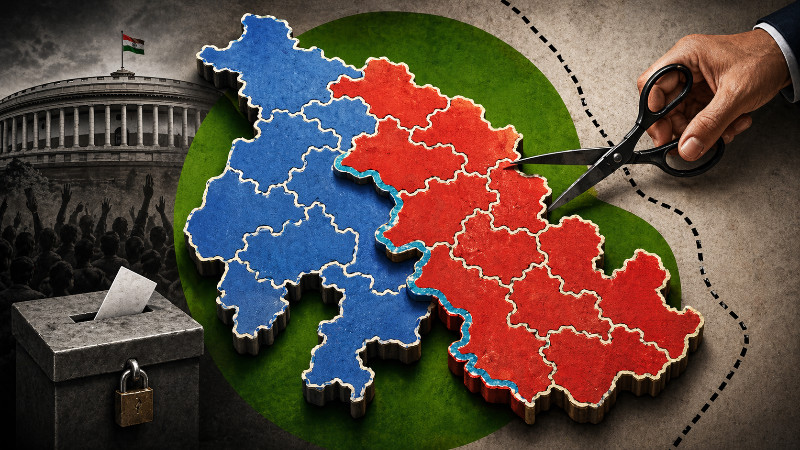
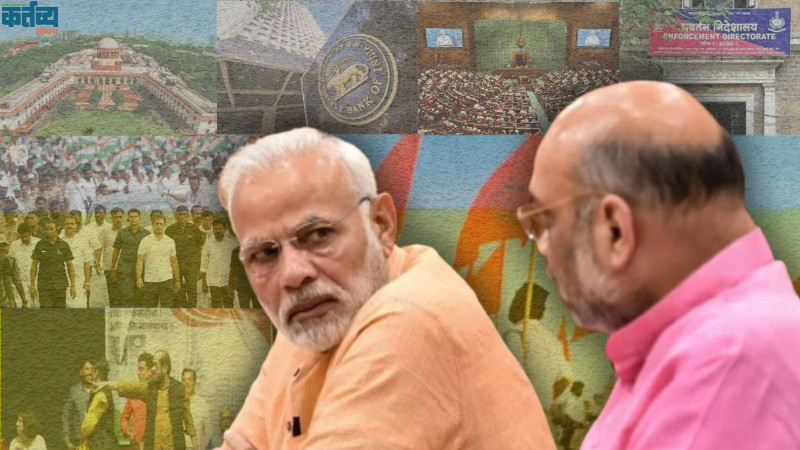
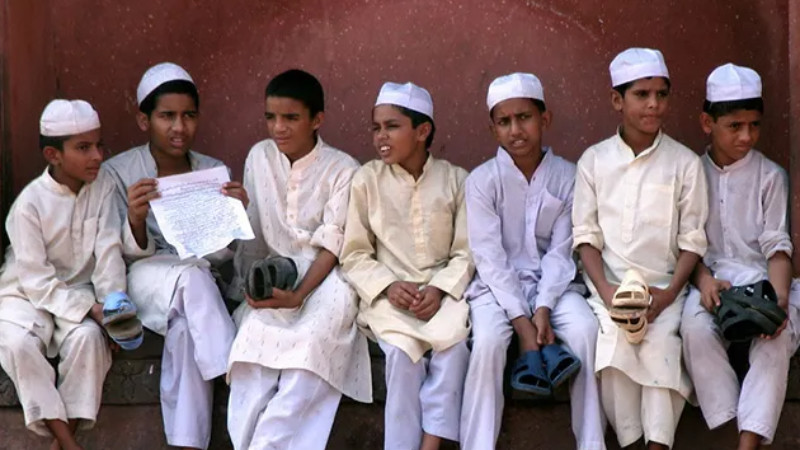
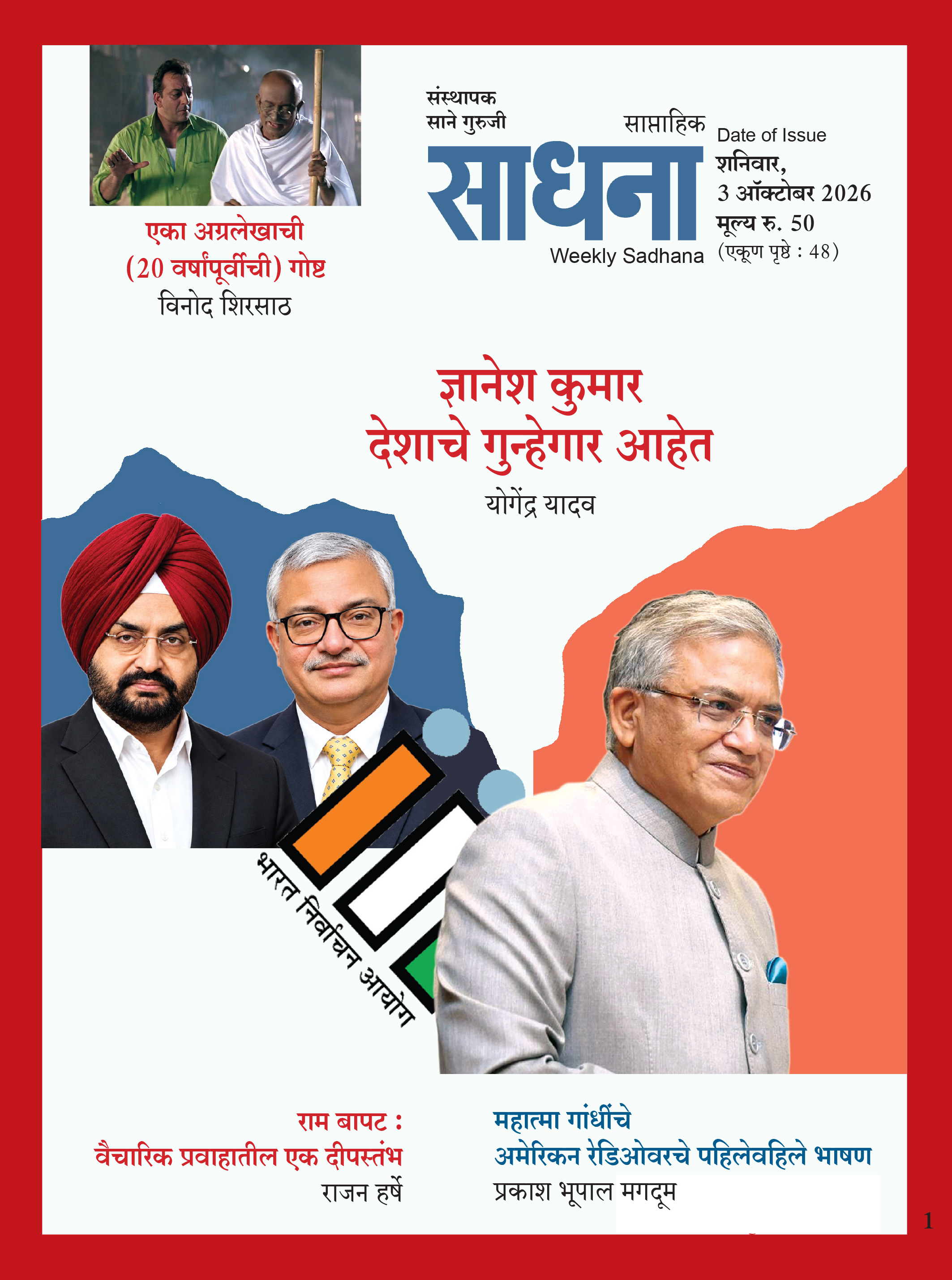
.png) The more fundamental question, however, is this: why did the CJP receive such a strong and widespread response? Why did it emerge at a time when the Narendra Modi government was completing twelve years in power and the BJP governed nearly two-thirds of India’s states? The answers are embedded within the question itself. Over the previous twelve years, the BJP had, through a combination of strategies that included persuasion, incentives, pressure, and division, weakened opposition parties and rendered Parliament ineffective. By placing individuals aligned with the RSS and BJP in senior positions throughout the administration, the government has ensured that decisions are taken in accordance with its wishes and priorities. The judiciary has been weakened through the appointment of RSS-BJP sympathisers to key positions, combined with the use of various inducements and pressures. Governors of all states and even the President of India have been compelled to function as little more than rubber stamps. Jagdeep Dhankhar, the Chairman of the Rajya Sabha and Vice-President of India, was compelled to vacate his position virtually overnight and has been pushed into obscurity. Om Birla, the Speaker of the Lok Sabha, was made to bend so far that opposition parties eventually brought a no-confidence motion against him in the Lok Sabha. The Chief Election Commissioner Gyanesh Kumar was made to crawl, and the opposition parties found it necessary to initiate impeachment proceedings against him. Not only that, the BJP has established extensive influence across the media landscape, with the support of major industrialists, while simultaneously constraining civil society organisations and social movements. The education system has suffered greatly, with university vice-chancellors being reduced to puppets. India’s approximately 200 million Muslims have been pushed towards second-class citizenship. “Bulldozer justice” in Uttar Pradesh is being made a universally accepted practice. Conspiracies are being hatched while undertaking the redrawing of electoral constituencies. By squeezing and constraining states governed by opposition parties, the federal system is being brought into distress.
The more fundamental question, however, is this: why did the CJP receive such a strong and widespread response? Why did it emerge at a time when the Narendra Modi government was completing twelve years in power and the BJP governed nearly two-thirds of India’s states? The answers are embedded within the question itself. Over the previous twelve years, the BJP had, through a combination of strategies that included persuasion, incentives, pressure, and division, weakened opposition parties and rendered Parliament ineffective. By placing individuals aligned with the RSS and BJP in senior positions throughout the administration, the government has ensured that decisions are taken in accordance with its wishes and priorities. The judiciary has been weakened through the appointment of RSS-BJP sympathisers to key positions, combined with the use of various inducements and pressures. Governors of all states and even the President of India have been compelled to function as little more than rubber stamps. Jagdeep Dhankhar, the Chairman of the Rajya Sabha and Vice-President of India, was compelled to vacate his position virtually overnight and has been pushed into obscurity. Om Birla, the Speaker of the Lok Sabha, was made to bend so far that opposition parties eventually brought a no-confidence motion against him in the Lok Sabha. The Chief Election Commissioner Gyanesh Kumar was made to crawl, and the opposition parties found it necessary to initiate impeachment proceedings against him. Not only that, the BJP has established extensive influence across the media landscape, with the support of major industrialists, while simultaneously constraining civil society organisations and social movements. The education system has suffered greatly, with university vice-chancellors being reduced to puppets. India’s approximately 200 million Muslims have been pushed towards second-class citizenship. “Bulldozer justice” in Uttar Pradesh is being made a universally accepted practice. Conspiracies are being hatched while undertaking the redrawing of electoral constituencies. By squeezing and constraining states governed by opposition parties, the federal system is being brought into distress.
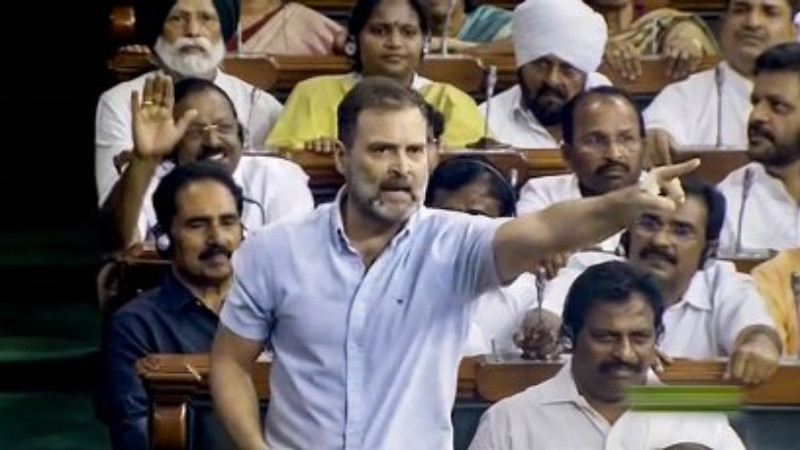
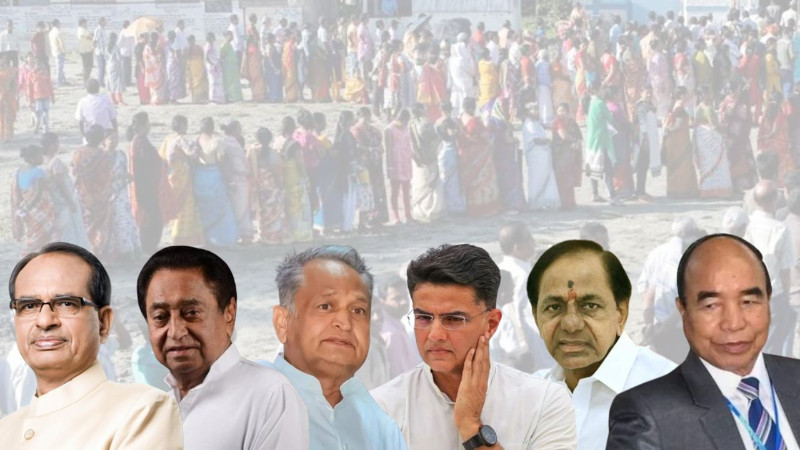
As a result of all these developments, those who cherish democracy and consider themselves genuinely nationalist have become increasingly uneasy. For many people, the level of concern for the country’s future has reached an unprecedented level. Adding to this anxiety is the absence of political parties that could stand firmly against the central government. Many regional parties seem to be tied to the interests of individual political families, while their leaders are making compromises of every kind to preserve their own positions. The Congress Party, the principal opposition party, has still not managed to shake off its lethargy even after twelve years. Following the “Bharat Jodo Yatra”, Rahul Gandhi underwent a significant political transformation. Since then, his confidence has grown considerably, and he has displayed greater sharpness and fearlessness in public life. However, he has largely failed to revitalise the Congress organisation itself.
Against this backdrop, the emergence of the CJP movement is a welcome development. It offers encouragement not only to opposition parties but also to the fourth pillar of democracy, which is the media, and even the fifth pillar, namely social movements, civil society organisations, and protest groups. It serves to reduce the climate of fear associated with authoritarian tendencies. Most importantly, it strengthens the self-respect of the Generation Z cohort. The movement challenges the widespread perception that today’s youth are self-absorbed and concerned only with material comforts. Over the past three decades, young people in India have increasingly appeared to undergo a process of desocialisation, while their behaviour has often seemed apolitical. In that context, the CJP movement could become an important step towards the socialisation and politicisation of the younger generation. From the perspective of India’s future, this may be its most significant achievement!
The question that remains is whether this movement will succeed in transforming the country’s present condition. In fact, there is no need to place such expectations upon it! The very fact that young people are participating in a movement of this nature is itself a major achievement.
Will it eventually develop into a political party? Maybe, maybe not. If so, will it follow the trajectory of the Aam Aadmi Party? It may, or it may not. Will the movement gradually fade away or lose direction? Could it fall under the influence of other forces? Could someone exploit it for their own purposes? Might the RSS-BJP attempt to infiltrate it, or perhaps have already done so? All these possibilities and limitations must certainly be kept in mind and yet one must welcome the Cockroach Janata Party! This is because India has always moved forward despite ups and downs. Its journey has often involved taking two steps forward and one step back. Therefore, if this movement helps the country take two steps forward today, we must welcome it. Even if forced to go one step backward later, the country will still have moved one step ahead!
- Vinod Shirsath (Editor)
kartavyasadhana@gmail.com
Translation by Rahee Dahake
Tags: coackroach janta party abhijeet dipke jantar mantar delhi dharmendra pradhan neet neet paper leak education resignation saurav das instagram followers protest editorial weekly sadhana साप्ताहिक साधना संपादकीय अभिजीत दिपके विनोद शिरसाठ कॉकरोच जनता पार्टी cjp सीजेपी बीजेपी भारतीय जनता पार्टी सोशल मीडिया समाज माध्यमे social media सौरव दास Load More Tags











Add Comment