
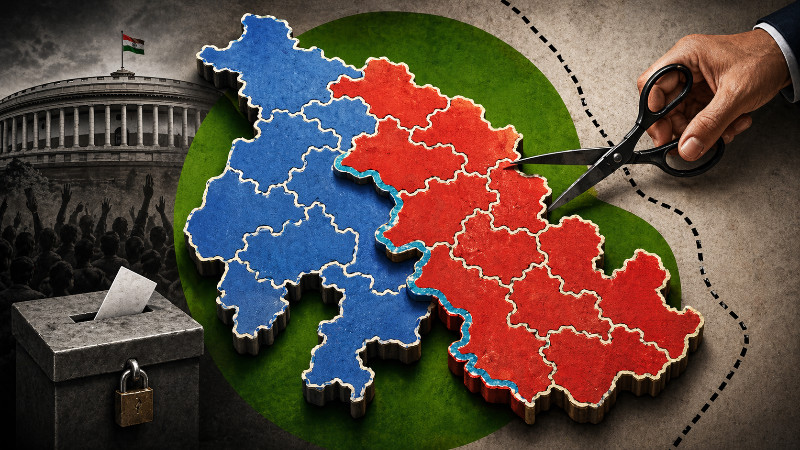
The malpractice we are talking about began two centuries ago (1812) in Massachusetts, USA. The Governor at the time, Elbridge Gerry, altered the boundaries of constituencies in a way that favoured his party. There was no need to threaten voters or to bribe them. The manipulation was purely geographical—yet it weakened the democratic voice of citizens. The new constituencies looked bizarre—long, twisted, almost reptile-like. Someone compared one such constituency to a salamander, a sea creature. Since the “salamander” was designed by Gerry, the term “Gerry-mander” was coined.
The current politics in Maharashtra, (and in India) is nothing but a dirty, overflowing sewer. You wonder, how so? Let’s take a quick overview.
Once upon a time in India (yes, it feels like ancient history now), there was a Union Railway Minister named Lal Bahadur Shastri. One day, he resigned. Why? Because a major train accident occurred, he took moral responsibility for it.
After the Emergency, in the Maharashtra Assembly elections, Congress was defeated, and the opposition formed the government. But Pannalal Surana, a Socialist Party candidate, lost. Some people suggested that he should go to the Legislative Council and then become a minister. But Surana said, “I will not enter through the back door.”
All this is very old now. These people, remain only in our memories. What is today’s picture? In 2024 Ajit Pawar’s wife Sunetra lost the election. She was sent to the Rajya Sabha. Why? No one in their party dared to even ask. The Congress party has always supported its defeated candidates and sent them to the Rajya Sabha. The same tradition is being continued by the NCP.
The ‘Hinduhṛidayasamrāṭ’ claimed in his speeches about protecting the interests of the ‘Marathi Manus’. But many times, non-Marathi people were sent to the Rajya Sabha, for example, Mukesh Patel, Pritish Nandy, Priyanka Chaturvedi, etc.
Now, instead of morality, let’s look at criminality.
In Bihar, Lalu Prasad Yadav practically destroyed law and order. Corruption thrived under him. He was even exposed and arrested. There were multiple lawsuits. He was convicted. And yet, his political standing is still influential.
In Maharashtra, Chhagan Bhujbal and many other leaders sit on high posts while being out on bail. Dhananjay Munde maintained a gang of goons. Allegations were made that those goons tortured and murdered a young sarpanch who opposed him. Videos were circulated. There was a huge uproar—only then did Munde resign from the minister’s post. He is Ajit Pawar’s follower.
Another such follower is Manikrao Kokate. He too became a minister. It was proven that a few years ago he got his hands on a government house by submitting forged documents. The court sentenced punishment. Yet he was not removed from the ministerial post. Why? Because his appeal is still pending. Chief Minister Devendra Fadnavis does not even dare to revoke decision-making powers from him. MLA Padalkar and MLA Awhad’s gangs fight right inside the Vidhan Bhavan premises. This is the ‘sewer’ I am talking about. The other day I heard a remark that the political leaders from Uttar Pradesh say, “May our state never become like Maharashtra.” What could be more alarming than this?
The proportion of elected members with serious criminal allegations has now increased greatly at all levels. A respected columnist/editor of the Times of India, Swaminathan Aiyar, said: “If I get just one wish, I would ask for this - until criminal cases against elected representatives are concluded, courts should freeze all other work. If such a law is passed, it could become a miracle cure for democracy.”
All this is true, of course. But apart from this, one more disease is eating away at democracy. In America, it is called gerrymandering. We will see the origin of this term later. But it simply means manipulating the boundaries of electoral constituencies. The Voters, The Political parties, and the Policies all remain the same. Yet by reshaping constituencies cunningly, one party can ensure that more of its candidates win. That is the trick. In this method, they do not threaten voters, they do not lure them with money, nothing of that sort. Still, the voter’s voice becomes somewhat weaker. What exactly is this? How is it misused in America? Is the Indian voter also fooled in this way? Let us try to answer these questions.
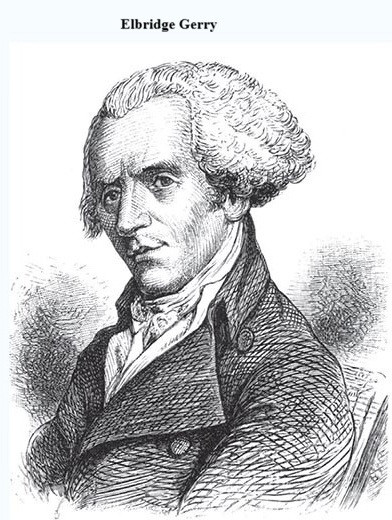 First, a little history. The malpractice we are talking about began two centuries ago (1812) in Massachusetts, USA. The Governor at the time, Elbridge Gerry, altered the boundaries of constituencies in a way that favoured his party. There was no need to threaten voters or to bribe them. The manipulation was purely geographical—yet it weakened the democratic voice of citizens. The new constituencies looked bizarre—long, twisted, almost reptile-like. Someone compared one such constituency to a salamander, a sea creature. Since the “salamander” was designed by Gerry, the term “Gerry-mander” was coined.
What makes gerrymandering so dangerous is that it does not require bribery, intimidation, or ballot tampering. It is a clean-looking trick. Not something any random person can do. It requires planning and a deep understanding of electoral arithmetic, as well as of the loopholes within the election system itself. Gerry’s intention was obvious: to secure more seats for his party. In the American system, the candidate who gets the maximum votes wins. That’s it.
Is this system universal? Not really. Britain and India follow the same method, but many European countries use proportional representation. Under that system, citizens vote for parties rather than individual candidates. Parties submit a list of candidates. If a party gets 50% votes, it gets roughly 50% seats from its list.
 France has another model. Citizens vote for candidates, but a candidate must secure more than 50% votes to win. If nobody crosses 50%, a second round takes place between the top two candidates. So what is the flaw in our system?
Imagine only two parties. Party A gets 51% votes overall, Party B gets 49%. How many seats will each party win? The answer is unpredictable. In an extreme case, Party A could win every seat. Sounds impossible? But think. If Party A gets just 51% votes in every constituency, it wins every constituency. In reality, voting patterns are never so neatly distributed. But the possibility exists.
Now, since we are discussing America, remember: the U.S. system is typically two-party, single-round, and winner-takes-all. This makes gerrymandering highly effective. To understand it, let’s use a simplified example.
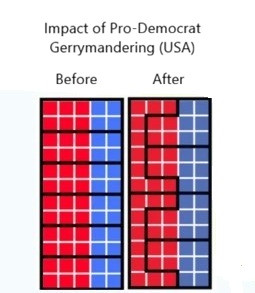
Imagine six constituencies, each with ten voters. In the first diagram, each constituency has six Republican voters (red) and four Democratic voters (blue). Total: 36 Republicans and 24 Democrats. So Republicans win all six seats.
But in the second diagram, after constituency boundaries are reshaped, Democrats win four out of six seats, and Republicans only two.
How?
This technique is called packing and cracking. “Packing” means stuffing your opponent’s voters into a small number of constituencies so they win overwhelmingly there—but waste votes. “Cracking” means spreading the remaining opponent voters thinly across multiple constituencies so they lose narrowly everywhere else.
In the example, Republicans are “packed” into two constituencies, while Democrats are distributed cleverly across the remaining four. The result: Democrats win more seats even though they have fewer voters. That is the core trick of gerrymandering.
Now let’s move from diagrams to real life.
Naturally formed constituencies are usually geographically and socially coherent—rural, urban, coastal, hilly, tribal, forested, and so on. Their shapes are not perfect circles or rectangles, but they are also not absurdly stretched and twisted.
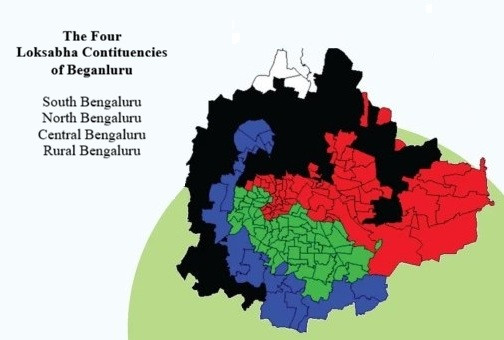
In large metro cities like Bengaluru, where geography does not impose strong boundaries, constituencies should normally remain compact. If they begin to look like snakes or lizards, it is hard not to suspect deliberate manipulation.
Look at the four Lok Sabha constituencies of Bengaluru. In my opinion, the boundaries look like a textbook case of political trickery. Of course, only local political experts can say whose interests these shapes were designed to serve. But one thing is clear: when boundaries are distorted, the real social and political identity of the electorate is no longer reflected in Parliament.
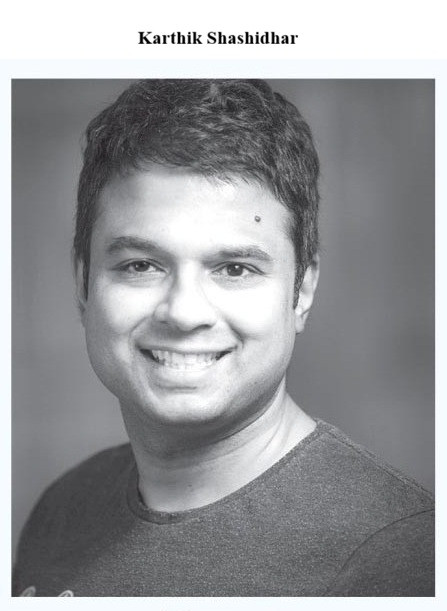
 This issue has been studied by Kartik Shashidhar in research conducted for Forge India. His article is available online. (India’s most gerrymandered constituencies) He has examined all Lok Sabha constituencies in India and asked a key question: can gerrymandering be measured?
His answer was to calculate a “naturalness percentage” for each constituency. The method is complex, but the logic is simple: the more natural and compact the constituency, the higher the score. The more distorted the shape, the lower the score. He also provided state-wise averages.
Madhya Pradesh scores 74%—the highest naturalness. Maharashtra scores 71%, and Assam 68%. On average, things do not look disastrous. But if you examine individual constituencies, the picture changes. Assam’s Kaliabor constituency has a naturalness score of just 39%. Maharashtra’s Gadchiroli scores 57%. Gadchiroli’s lower score could partly be explained by geography and borders. But Haryana’s Gurgaon scores 56%, and Bengaluru North scores 51%.
So yes, Lok Sabha constituencies have been studied. But what about Assembly constituencies? That work seems missing—and it is urgently needed.
Read Also: ‘नॅरेटिव्ह’प्रधान प्रचारापलिकडच्या ‘सेंटिमेंट्स’ (योगेश बोराटे)
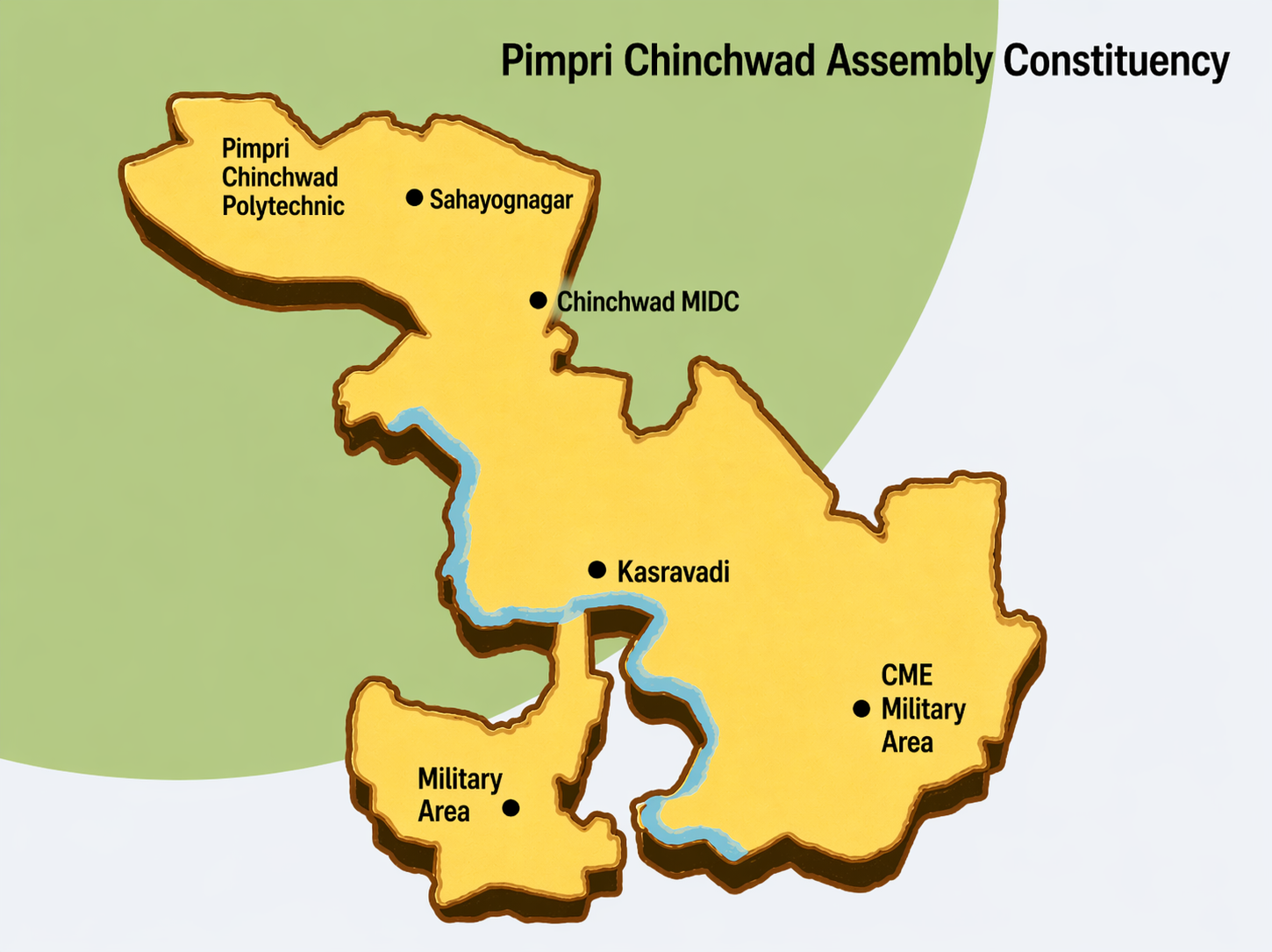
Take Pimpri-Chinchwad as an example. Its Assembly constituency map strongly suggests that boundaries have been cut and stitched for political convenience.
 Now the next question: how do we calculate such “naturalness” ourselves?
Here is my simple method.
Place the constituency map inside the smallest possible rectangle such that the constituency’s extreme edges touch the rectangle’s borders. Then divide the constituency’s area by the rectangle’s area. The result will give a rough “compactness” or naturalness score.
A computer expert or statistician can easily automate this. But beyond mathematics, political scientists and sociologists must examine constituencies where artificial patches seem to have been added, because the real question is: who benefits and who loses?
I knew I was not a political science expert, so I approached the head of the Political Science department at Pune University. I requested his participation. The response was: “I do not work on delimitation.” (As if I do!) After one rejection, I approached a political science professor in a college in Ahmednagar. He too ignored the idea. We keep praising “interdisciplinary research” in speeches, but avoid it in practice. The New Education Policy allows students to take up projects beyond their syllabus. This could be a perfect interdisciplinary project. But my experience is that teachers themselves are reluctant. People don’t want to step outside their comfort zones. And yes, it is depressing.
Last month I read a news report about Donald Trump. Texas was heading towards elections. Trump reportedly instructed the governor: redraw constituency boundaries in such a way that Republicans gain five extra seats. This is blatant abuse. Earlier, such things happened quietly. Trump, as usual, has made it shamelessly open.
Will anyone resist? Some Republican legislators might express mild protest. Those who currently have “safe” constituencies may become less secure, because a portion of their area could be cut off and attached to another constituency. And if something goes wrong during election season, their seat could be at risk.
How? Suppose an MLA has 70% support and wins comfortably. If part of his constituency is removed, his support might fall to 55%. If an unexpected wave or controversy arises, he could slip below 50%. In fact Trump’s manipulation could backfire even on his own party members. To prevent such misuse, the demand in the U.S. has been growing for years: constituency delimitation should be handled by an independent commission.
Some states have tried this. California is a good example. In 2010, California established an independent commission. A list of applicants was prepared. From that list, the legislature selected five Republicans, five Democrats, and four independent citizens. This commission announced new constituency boundaries on 15 August 2011. Many scholars believe the new structure was genuinely impartial, natural, and not designed for party advantage. One proof is that some politicians who once won easily from their old constituencies found it difficult now. Some even withdrew from elections.
But one point must be remembered. We are judging manipulation only by looking at maps. We are accusing based on shapes alone. But we have not studied voters themselves. And mathematics alone cannot prove everything. So what should be done? Whenever a constituency map looks patched or stitched, the voter composition must be studied. We must ask: whose voting power has been diluted, and who has been unfairly empowered?
For example, in America’s southern states, efforts still exist to keep African-origin communities away from political power. So investigators must check whether African-origin neighbourhoods have been deliberately split and distributed across multiple constituencies. If that is found, it becomes evidence of gerrymandering. We must also trace who made the change and when.
Similarly, in India, many Muslim voters feel that the central government treats them unfairly. So it is worth investigating whether Muslim-majority areas have been split and merged into different constituencies to reduce their political influence.
It is also possible to check whether Muslim-majority constituencies have deliberately been reserved for backward classes, altering the political equation.
Under the Indian Constitution, drawing constituency boundaries is the job of the Delimitation Commission. Its members are appointed by the President. Under Articles 82 and 170, the aim is to ensure proportional representation according to population changes. The decisions of this commission cannot be challenged in court.
In India, delimitation happens in layers. First, municipal wards and local constituencies are fixed. These are combined to form Assembly constituencies. Then, the Assembly constituencies are combined to form Lok Sabha constituencies. With such a system in place, how exactly do politicians manage to push their partisan interests into the process
Experts will have to explain. I admit, I don’t know.
- Dr Anil Gore
goreanil@gmail.com
(The author is a renowned Applied Statistician and Retired Professor of Statistics, Savitribai Phule Pune University, Pune)
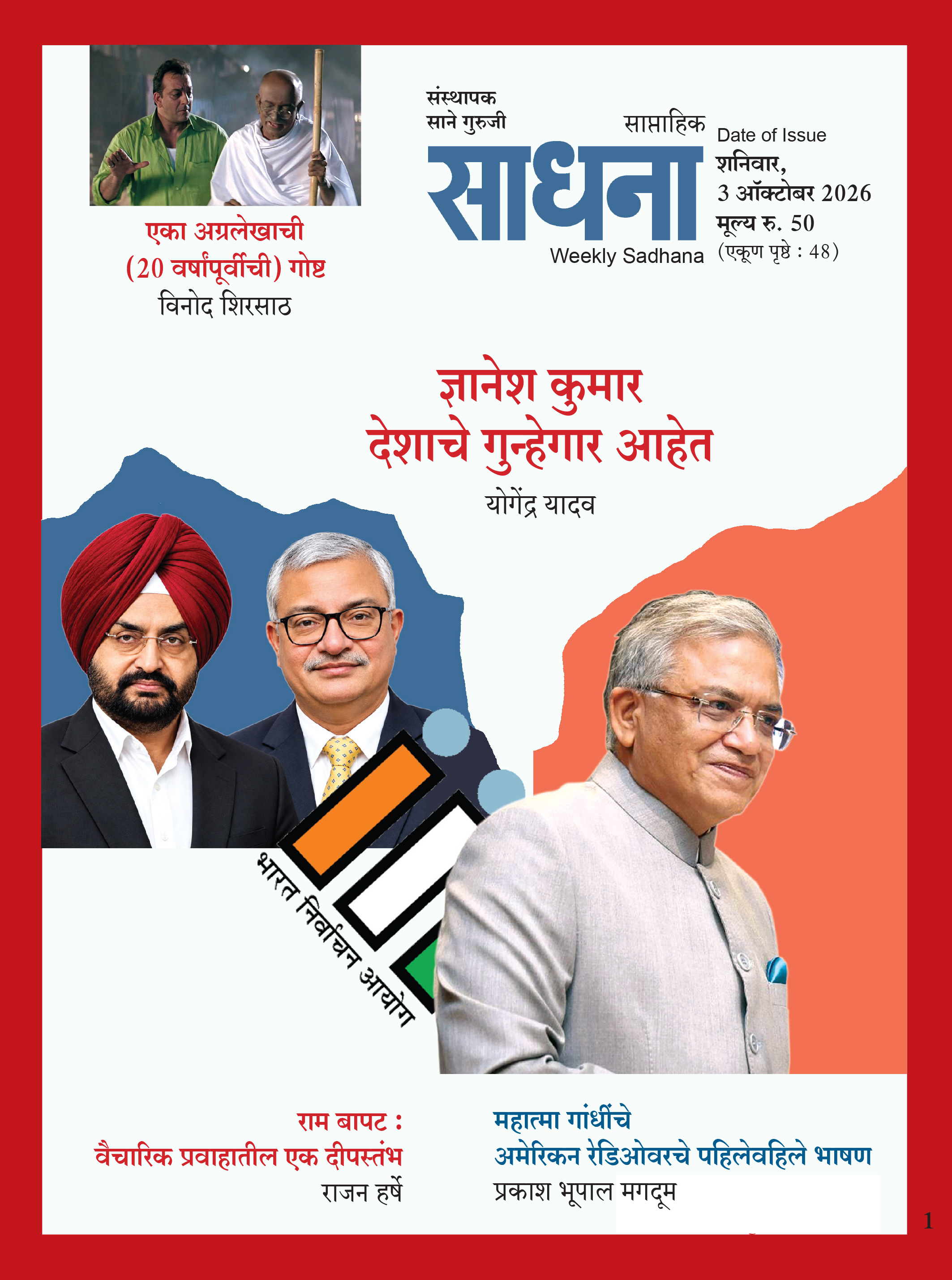
The original article in Marathi featured as Coverstory of the Weekly Sadhana Issue dated 6 September 2025 . It can be read here : लोकशाहीत लपलेली लबाडी
It has been translated using an AI Tool, with a manual review and few manual modifications by the author.
Tags: delimitation delimitation commission electoral constituency electoral constituency manipulation karthik shashidhar electoral malpractice usa Load More Tags













Add Comment