
Read Part 1 of this Speech here:
Capitalism’s Phases and Evolving Challenges for India Since Independence (Part 1/2)
Ahistorical Analysis and Short Termism
In this framework, analysis becomes ahistorical and therefore static. Historical evolution is ignored and what matters is here and now, resulting in short termism. But, all important societal aspects are long term. Typically, the past is viewed from the prism of the present. When this is done, one forgets the different social and political conditions prevailing in the past. For instance, there was no democracy and Kings could be brutal – they burnt and pillaged the defeated. That cannot be turned into a grudge in the present to seek revenge and retribution. The point is to learn from the past and not repeat the mistakes.
Human beings and society are historically conditioned. What people and society believe in is conditioned by the path they have traversed. Today’s problems have a history and their solution has to take that into account. Further, what may work in one society may not work in another or what may be the case at one point of time may not be applicable at another point of time.
For example, a society that cultivates scientific temper excels in R&D while another where feudal values persist finds doing research difficult. Even though similar institutions may exist in both, the output differs. In India, the British induced education system pushed rote learning and weakened knowledge absorption by students which makes its further development difficult. So, higher education does not produce good teachers for schools and that leads to weak students entering higher education and to poor quality research.
Other Aspects of Marketization
So, generating socially relevant knowledge required by society becomes difficult. Indian intellectuals have largely been ‘derived intellectuals’, recycling knowledge from advanced countries. Society then uses solutions copied from others which were created in a different context and therefore not applicable in its own context. The borrowed solutions becomes non-solutions which rather than solving the problem makes the situation more complex.
Marketization has resulted in a new international division of labour with advanced clean technology production in the advanced countries and intermediate and low technology polluting production in the developing countries. So, the advanced countries are able to consume more while keeping their pollution levels in check while the developing countries suffer. This is visible in India which now has some of the most polluted rivers and air in cities. This pollution impacts the poor in the developing countries the most.
In brief, the marketization phase of globalization in India since 1991, has brought about fundamental changes in thinking in society. The hard face of capitalism is visible with the decline of the welfare state and pro-business policies at the cost of environment and labour. There is growing inequality aggravated by the growing black economy. The marginalized have got more marginalized and individualization has led to reduced collective effort at resisting. Consumerism has come in handy to divert the attention from the real issues.
Indian Economy in the 2000s
The economy has become dependent on the growth of the organized sector which employs 6% of the work force. This narrow base of growth has led to economic instability. Data reliability has declined as it is based largely on the organized sector. It acts as a proxy for most of the declining unorganized sector thereby GDP is over estimated. The official data shows a 6.5% growth since demonetization in 2016 while it is actually around 2%. So, GDP is over estimated by 48%.
Thus the claim that in 2025 India will become the 4th largest economy ahead of Japan is false. India is as yet the 7th largest economy just ahead of Italy. If the unorganized sector had been growing at 6.5%, employment generation would have been robust and demand would be surging rather than weak as has been the case in the last 9 years.
In India, disparities have increased since 1991 and there is distress in the unorganized sector. To prevent a social explosion, UPA government promulgated ‘safety nets’ after 2005, like, Right to food, employment and education. But this is not the solution for unemployment and poverty.
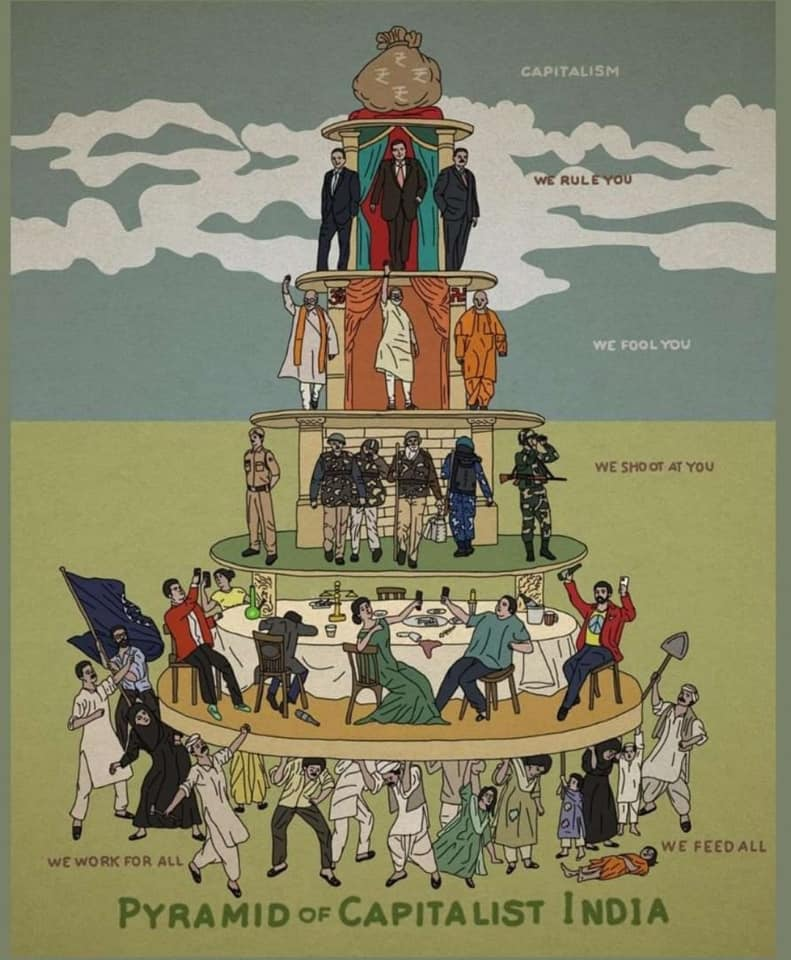 IIT Bombay Poster For Workshop on Studies in Capitalism in South Asia
Now, the World Bank has been proposing Universal Basic Income so that the unemployed can have some purchasing power to boost demand. But this does not give dignity to the unemployed and leads to growing alienation.
While the growth performance during the UPA years from 2004 to 2009 was good, it fell due to the Global Financial crisis of 2007-08 and again due to the Quantitative Easing in 2012. The NDA came to power in 2014 when the economy was recovering from the earlier decline. But through policy it induced shocks to the economy which led to the decline of the economy and further marginalization of the unorganized sector.
In 2016 there was the ill thought demonetization. In 2017 the structurally faulty GST was introduced. It cannot be successfully introduced in India with its large unorganized sector which gets damaged by it. In 2018, there was the NBFC crisis which again damaged the unorganized sector. Finally, in 2020 there was the sudden lockdown with its severe impact on the unorganized sector. These shocks to the economy and especially its unorganized component have adverse economic impact and recovery is not easy. Government using its vast propaganda machinery and capture of the media is propagating a positive image of the economy while the unorganized sector suffers. This adversity is not captured either in data or in policy and this sector is invisiblized.
Emerging Current Capitalist Phase
Three critical changes are ongoing. a) Rapid evolution of AI and possibility of emergence of a super intelligence. b) Driven by Donald Trump, Capitalism is presenting its raw face. And c) An evolving Cold War between two capitalist blocs.
A new cold war has erupted between two capitalist blocs fighting for world dominance and for resources. US has attempted to thwart the rapid rise of China by restricting availability of advanced technology and encircling it. China has been breaking out via massive investments through its Belt and Road initiative to link it to global markets. The Ukraine war has led to sanctions on Russia and drawing closer of China and Russia. So, two blocs of trade, technology and finance are emerging in the world.
Rapid technological change creates a ‘mist of the future’ making it difficult to perceive the future. This uncertainty makes it difficult to plan for the likely changes. Expectations get belied repeatedly so that society and people turn short termists.
Technical change has always created societal issues. But, the present change differs from the earlier ones which displaced physical labour. Now mental labour is getting displaced. Earlier, it was work on farms and assembly lines in manufacturing that was displaced by machines. Computers replaced typewriters. E-commerce and e-banking are replacing shops and banks. Now work of call centres and BPOs which could answer client queries will get displaced by bots. Coaching and grading are possible via AI. Work of legal assistants of lawyers can be done by AI. Videos, music and art can be produced by AI and it is speeding up scientific research.
Some experts are cautioning society. They argue that in its totality, there is a strong possibility of emergence of an advanced intelligence which may be autonomous of humans and society. If true, the direction it may drive society towards is unclear. But, the development of AI will not be slowed down since technology firms are driving it in their self-interest. Big governments are attracted to AI since it promises greater control over people. Lack of trust makes it difficult to stop. It is believed that that the one who is ahead will corner the benefits.
Trumpism: Raw Capitalism
Trump is squeezing whoever he can including US’s closest allies - Canada and EU.. China has stood up and is proving to be the exception. India is unable to concede to Trump’s two key demands – opening up of agriculture and curtailing defence ties with Russia.
USA has signed one-sided trade deals with several nations – EU, Japan, S Korea and UK. For others he has unilaterally announced tariffs. Countries that have resisted have been slapped with high tariffs. Brazil faces 50% tariffs and China and S Africa face 30% tariff.
High tariffs by the US are ‘protectionist’ and not ‘reciprocal’ as claimed. The irony is that the richest and the technologically most advanced nation in the world is seeking to protect itself against much poorer countries, like, India, Myanmar and the African nations. There is helplessness given America’s economic, financial and military dominance.
Trump’s success has depended on his preventing his big trading partners from uniting to take a common stand. Each nation thought it could work out a beneficial deal for itself – a ‘beggar thy neighbour’ approach. For instance, India thought it would get special terms due to its strategic partnership.
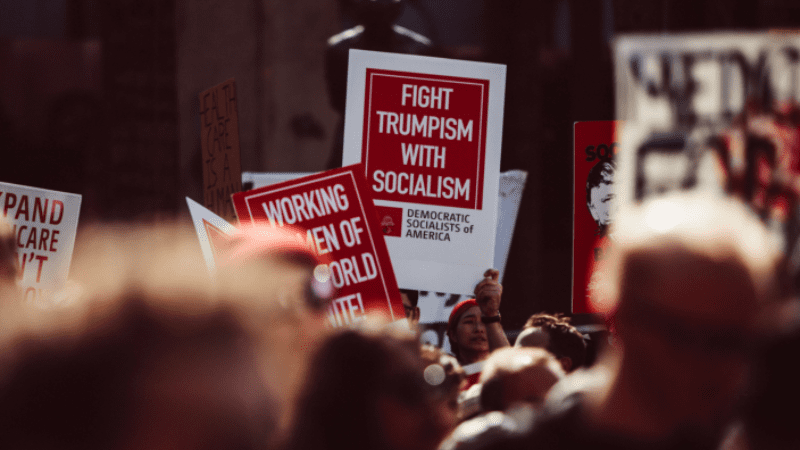 Image Source: Democracy Journal
The Macro Dynamics of Trump’s Actions
What are the global implications? Trump has laid bare the hard face of capitalism - ‘might is right’. The earlier give and take and multilateralism have been replaced by bilateralism. The lesson of depression of the 1920s is forgotten and Welfarism has been relegated to the back ground.
Protectionist tariffs, under various scenarios, will raise prices in the US and reduce real incomes of workers thereby lowering demand and causing a slowdown in the US – a stagflationary situation. Higher investments could counter the slowdown and AI investments may be doing that. But given the increased uncertainty, increase in the H1B visa fees and decline of the dollar that is unlikely in general. Reduced imports due to high tariffs will also boost the economy a bit.
So, the effect of higher tariffs would take effect slowly and have a global impact. As global trade slows down due to reduction in demand, each nation would have a surplus of what they used to sell to the USA. So, there would be a scramble to find markets for these surpluses with increased possibility of dumping. To counter that, each nation may raise tariffs and a tariff war may ensue.
Technical Change, Sustainability and Demand
Technical change has typically led to use of more capital per worker as more and more machines get used in production. To produce a given output fewer workers are required, as is visible in automated factories. Even dark factories are coming up where there are no workers. The result would be rising unemployment and a declining share of wages in output.
But, technical change increases the number of lines of production to give additional employment. Nut, the share of wages in output declines in each line of production. Thus, overall consumption lags behind output thereby creating a shortage of demand and periodic economic downturn. This demand shortage has been countered by growing militarization, consumerism and creation of social waste.
Governments’ increased expenditure on welfare – health, education etc., generates demand. So does spending on building public infrastructure like roads and railways. This created the golden period of capitalism between the 1950s and 1970s. These policies saw a reversal from the 1980s and the demand problem manifested itself periodically.
AI and robotization are changing production processes, increasing unemployment, reducing wage share and aggravating demand problem. Will new lines of production emerge quickly and can labour retrain quickly to operate them since these will also be AI intensive?
If AI and robots perform most of the physical and mental work, they will become self-sufficient. Those firms that control AI and robotics will capture all the profits. If only a few people are gainfully employed and the rest become redundant where will demand come from for the vast amount of production that AI and robots would produce?
Read Also - RIP, Liberal Democracy (Part 2) - Sunil Deshmukh
Tugan Baranovsky had pointed out that capitalism can survive using machines to produce more machines. In brief, in this new phase of AI run capitalism, human labour will become redundant and demand will not matter. Presently, society is too distracted by Cold War and real wars to even gauge the new threats to it from this new phase of capitalism.
What Should India Do?
India is in a bind. As already argued it cannot give in to Trump’s demands. India’s weakness is both technological and military. That is why it is unable to resist like China has done. Trump knows India is dependent on the US and that Russia has become less supportive of India in the last twenty years since it has drawn closer to the West. So, India lacks strategic autonomy.
If India gives into Trump’s diktat, Indian agriculture would face competition from US imports which its poor farmers cannot withstand. And if exports at high tariffs, profits and wages will be squeezed. The budget is also likely to be hit by higher export subsidies. The resulting increase in the budget deficit would lead to cuts in social sector expenditures and workers living standards. All these factors will lead to lower demand.
In brief, even if the US changes course, due to the problems it will run into, India needs to change its strategy to focus on raising internal demand. That requires India to focus on the 94% employed in the unorganised sector by shifting policy towards employment generation, education, R&D and health. International relationships would also need to be reset so as to avoid being overly dependent on any one power.
Conclusion
India has gone through tough times during the last more than two centuries. It started with capitalism as colonialism that disrupted Indian society economically, socially and politically. This disruption persisted post-Independence and took different forms as Capitalism went through its various phases. These phases are a consequence of Capitalism transforming itself in response to the challenges it faced.
Since Capitalism is global, it has buffeted India due to lack of an independent strategy of development based on the needs of its vast marginalized sections. The mixed economy model based on the two paths of Western development was a top down model which delivered little to the marginalized. This led to crisis after crisis post-Independence. Soon, the consensus among the self-serving ruling elite dissipated and that led to policy incoherence, growing black economy and further marginalization. These were reinforced by the persistence of the feudal mindset and lack of accountability of the rulers who have used growing polarization and authoritarianism to stay in power. This has led to a deterioration in social and political conditions in the country.
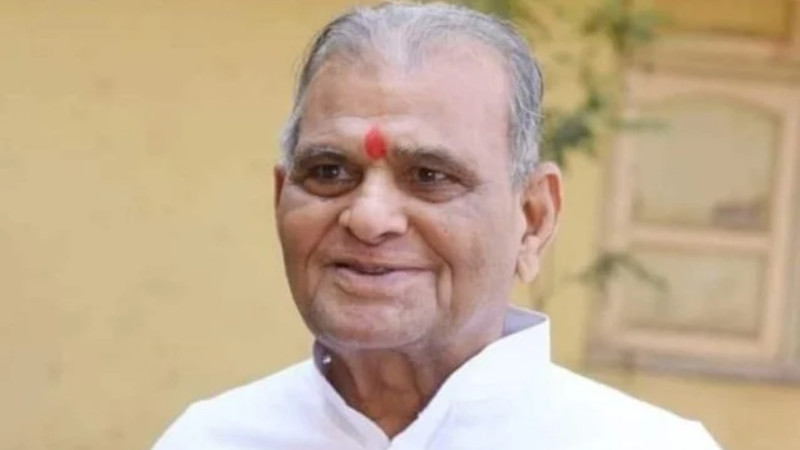
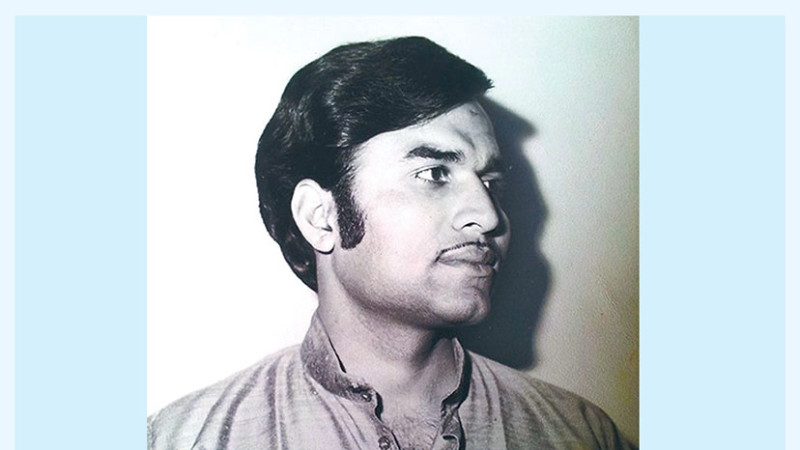
Presently, major global developments are occurring which are throwing new challenges. The rapidity of the current changes is leading the world into uncharted territory. Thinking within the present socio-economic-politico framework which is fraying rapidly would not help. One has to think of the present as the start of a new phase of capitalism or even the breakdown of capitalism. India needs to prepare for it, through inclusive policies which makes for greater social cohesiveness lest it again falls behind as in the last 75 years. This is what Shri Sadanand Varde worked for and it would have been his wish for the future.
- Arun Kumar
(Retired Prof. of Economics, JNU)
Shri Sadanand Varde Memorial Lecture in Pune, October 11, 2025.
Tags: jnu sadhana digital economics politics capitalism sadanand varde capitalism in india 1947 1991 2024 2019 2025 Load More Tags



















Add Comment