
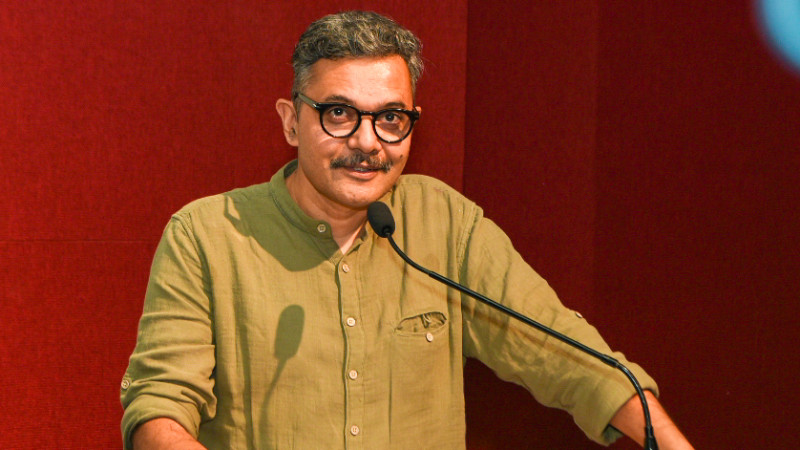
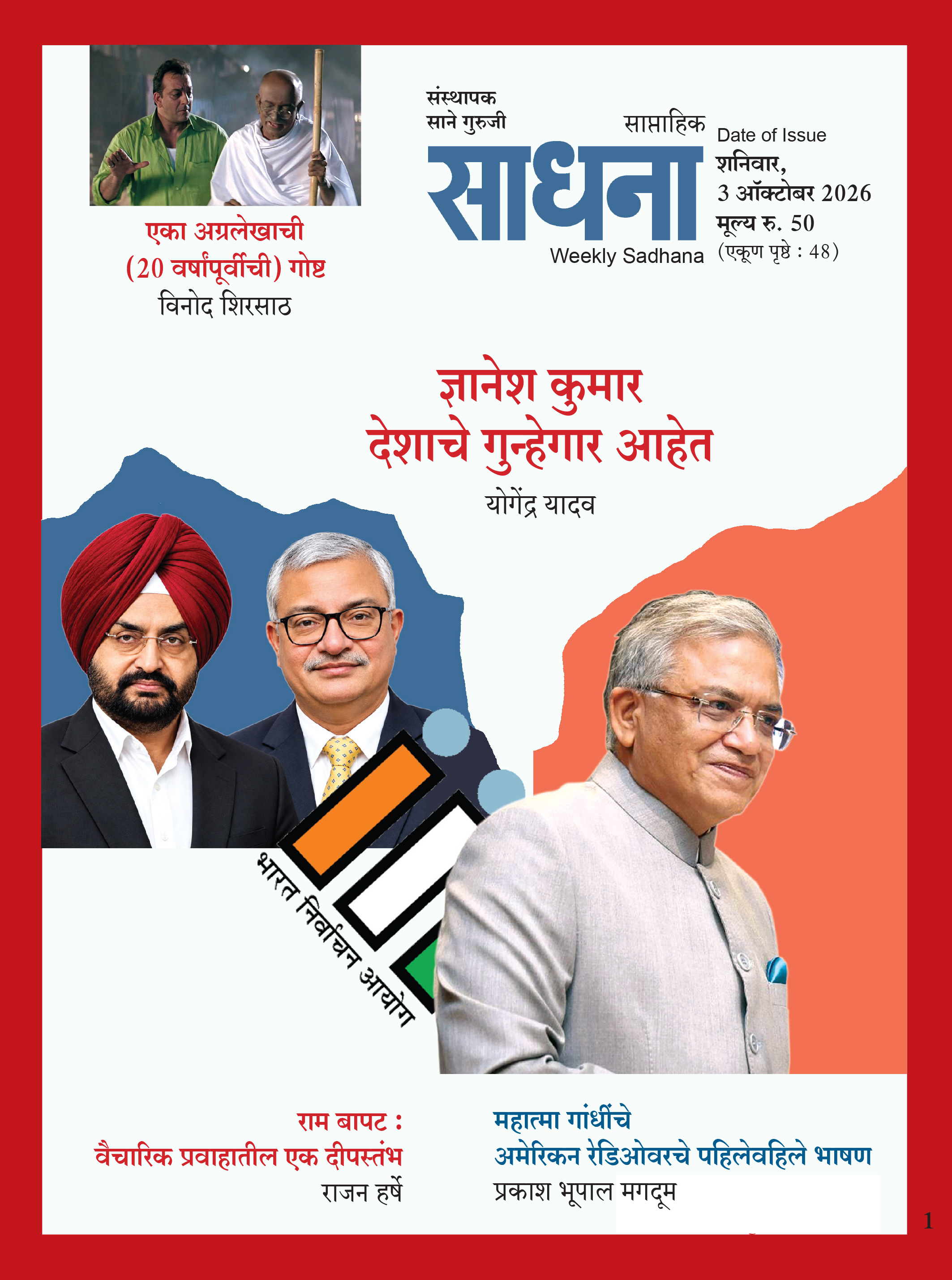
Sadhana Weekly published its issue dated 20 December 2025 as a special issue dedicated to the theme "Goa: Known and Unknown". This issue was released on the eve of the 64th Goa Liberation Day, i.e. on 18 December 2025, at Gomant Vidyaniketan, Madgaon (Goa). Sandesh Prabhudesai acted as the guest editor of this issue. The issue was released at the hands of Neelesh Misra, who has a multifaceted identity as a writer, journalist, screenplay writer, and storyteller. On the occasion, he delivered a speech in English. We are publishing the entire speech here. The Marathi Translation of the speech can be read in the Weekly Sadhana Issue dated 10 January 2026.
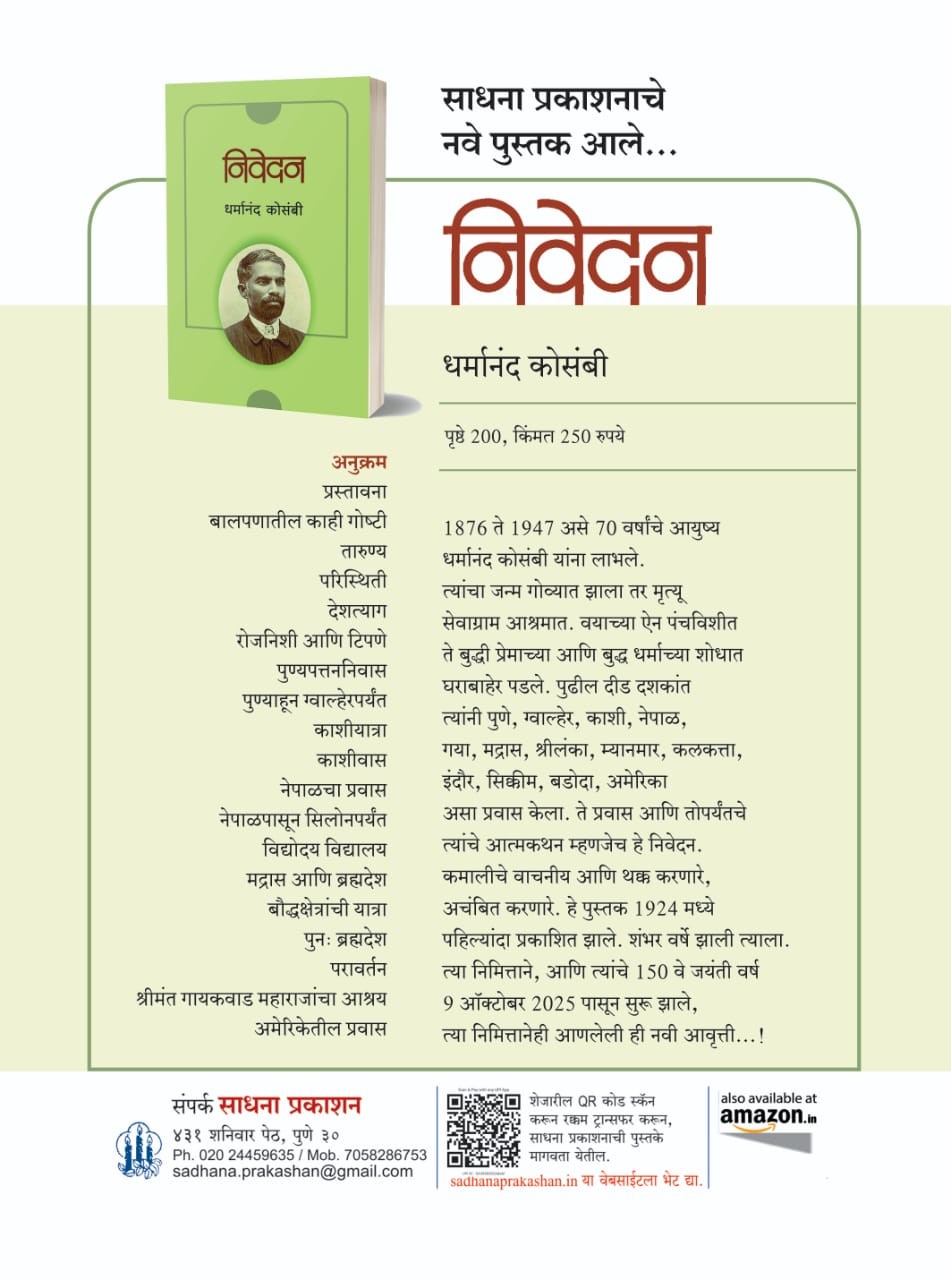
It is a pleasure and an honor to be here today at the release of the Weekly Sadhana’s special issue dedicated to the theme “Goa : Known and Unknown” and the autobiography of Dharmanand Kosambi–Nivedan. Thank you for inviting me. Just yesterday I was in the biting cold of the north and here I am today, suddenly experiencing a warm afternoon. I am the odd man out here, almost like an outsider. Leaving behind a hectic yet settled life of a journalist in Delhi, and after working in Mumbai’s film and entertainment industry, I had returned to my native place near Lucknow. From there, I moved straight to Goa, nearly 1,800 kilometres away—a place I had earlier visited only as a tourist, with very little understanding of the comings and goings of everyday life here.
It was a major life decision for me. I moved here for my now 10-year-old daughter, Vaidehi. I wanted to move her away from the sharp-edged existence of the big cities where class or status mattered a lot. Where you’d ‘have to’ go to a five-star hotel to celebrate her birthday and get super-expensive return gifts for her friends, and look out for the brand of clothes her classmates are wearing and choose equivalent or superior brands for your child. All of that had crept up into my daughter’s life, even in Lucknow, let alone Delhi and Mumbai. I wanted to move her away from all of that and give her a chance to grow up in an environment similar to what we as kids experienced.
My father is a retired geologist. As a child, he had to walk 12 kilometers through a forest to reach his school. And since then, it had been his biggest dream to set up a school in his own village. He was a brilliant student, so he went to Lucknow and further to Canada for higher studies, where he discovered 565 million-year-old fossils, which plugged a hole in the Darvin’s theory of evolution and explained how we became multicellular from unicellular organisms. He became a very famous student and joined Geological Survey of Canada, earned good money, bought a Ferrari, and he was all set for a so-called “good life” in a foreign land, but that was not what he wanted. He and his friends had a file titled “Kya Kiya Jaye?” – What needs to be done? It had a list of their plans for helping people in India in various ways. This was in the 1960’s, and India was going through drought and war-induced issues and tough times in general. So he returned to his village. And together with my mother, Mrs. Nirmala Misra, started a school there, so that no other child ever had to walk for miles just to reach his school. He is 86 now and still actively works for the school, and seldom gets time to visit us here in Goa in between all his responsibilities.
 That is the kind of environment, empathy, value-base, and rootedness, I wanted to give to my daughter. and I had thought I had found it when I moved back to Lucknow after having lived in Delhi and Mumbai. I had really thought that was my homecoming, my ghar-wapsi. But I realized later that it, in fact, was not, and to give my daughter the same values, and hopefully the same environment that our parents had given us, we decided to move to Goa and I do believe we have finally found the roots and a home here.
Back in Lucknow I had named my home “Slow”. Slow, to me, is not lack of speed, but it’s about living, internalizing, about becoming more rooted, more sentimental, more nostalgic, and coming back to what really matters. It was what I wanted to feel when I came home, hence the name. Today when people ask me, “You, settled in Goa?”. I just smile at then and say, “It’s sad, how little you know about Goa. If Slow were a country, Goa would be its capital." The real Goa, according go me, thrives in knowledge and culture and relationships.
And that’s the very place I wanted my daughter to grow up in.
I came here knowing I would be the odd man out, but I was curious and I am approaching this place with the humility which any of us should approach any new land with. I have lived in many places. I have covered many regions as a journalist. I have been in many cities and I have always felt that the Dharma of being an outsider is what you must live up to whenever visiting a new land. Even when I came to Goa and went to Kankon, Sandesh ji was very particular in reminding me that Kankon has what you people from Bardez won't realise. We discussed migration and adopting to the scenarios as you move across lands and regions. I have been there, done that, so I can tell you with truth, this feeling of adopting a new place as your own comes with responsibility and empathy. Empathy is my secret source; it's what drives me, and it is what has made me a storyteller.
Every day when I tell a story, I BECOME THE OTHER. I become someone else. Put on their shoes and try to understand what they think, how they feel and why do they do what they do. And that is what I have been doing since I have come to Goa. I have tried to become the other. Tried to look at the world from the point of view of the lovely people I have interacted with and learned so many great things from. The funny thing is that, I don’t want to be counted as the odd man out or the outsider. I want to be counted as an insider, as one of you. I carry in me, a great sense of love, respect, and appreciation for Goa. And I keep expressing that on all the public platforms whenever I have the chance. Because even today, wherever I go, people are taken aback that I, of all the people, have moved, of all places, here to Goa. Because Goa is living in a trap of the gloassy consumerist image or perception created over years and years.
 On the other hand, there is the real Goa, which thrives on knowledge, culture, art, relationshis and a world view that is unique in this country. And that is why, people asking me about my decision to move to Goa with mild disbelief or derision was painful for me. Almost immediately after moving here, I started using this one word - I used it in my conversations with several of my friends - a word which I thought I had coined – Goanness. Later I came to know it already existed, Goyankarpon. The vibe of being in Goa does not have anything to do with where you come from, or where your origins lie, or what Goa’s image is. It is just the spirit of being here in this moment.
I have tried quite aggressively to break these stereotypes about Goa, which are very commonly believed by people outside of Goa. Goa has become a picture postcard through the social media and the cinema. But I feel Goa needs a lot more postmen, who can show the image of the real Goa to the world outside. I try to be one. I feel that I am a proud postman of Goa. And I have always narrated the stories from here, not of the beaches, not of the beauty, but of people. I am truly a people’s person, and I have lovely stories of the simple, beautiful, and the uncluttered nature of life and way of looking at the world that Goa teaches me, every day!
It has been this journey that has given a lot of stability and a great sense of purpose to my life, where purpose always held great importance. It is a journey that has given a great sense of poise to my daughter. She’s a water baby, she loves swimming and the multi-cultural environment where she meets some amazing sets of children.
I feel it is a privilege to be able to pursue this life, to make this very tough, almost unthinkable decision to leave everything behind, uproot yourself, sell your house and come here and not regret it at all. My daughter loves it here. And now we are at a stage where, if we have a disagreement with her, and I have to negotiate with her, my biggest threat to my daughter is “I think we need to leave Goa and take you back to your school in Lucknow.” And it works every time! It has become unthinkable for her to leave Goa.
 Through this lovely journey, the one constant angst I have is that I have not been able to give back to Goa as much as I really want to. I have many things in mind, I keep thinking about ways to do so, and I am sure I would succeed in some, if not all.
I spoke about being a postman and I do have a certain vantage for that. I feel we don’t talk enough about things that really matter in Goa. And as I refuse to feel like an outsider, I feel language is just a means of communication and it should never hamper people’s understanding of each other. I have sat through this lovely evening and understood about 60 percent of what was being said, and I was really satisfied. When they sent me an electronic copy of Weekly Sadhana’s Goa Special Issue, they asked me if I understood Marathi. I said, “I don’t. But I’ll manage.” I uploaded the content on ChatGPT and asked it to summarize it for me. And thus I understood the essence of what the magazine says. I spent the two and a half hours of my flight catching up with what was written in here about agriculture, the Uniform Civil Code, revenue etc. I thought these are the gaps that need to be bridged, and the Goa Story really needs to be told in new ways.
I am very happy to share that I am doing a show “Gaon se” on the DD National Channel. Where we are telling 416 stories from the rural India in the first season. And I saw that many of those stories are from Goa. The Khajan practice in agriculture, the intertwined, syncretic practices and processions of the Hindu and Christian communities, are covered. These are the stories that need to be told.
As a Hindu, I have found the meaning of living Hinduism as a way of life here in Goa. It is not something that makes me sharp-edged. It is, in fact, a celebration of life in beautiful ways. There is no haughtiness to it, there is no pompous show-off; it’s simply the beauty of living your religion. I have never seen Hinduism practised so beautifully elsewhere as it is in Goa.
So, stories of Goa need to be told. We need storytellers to tell these stories first to Goa itself. Because these stories about the people, the culture, and what lies beyond the beaches and liquor and the nightlife, about what lies in the hinterland, are being forgotten. Postmen like me have a responsibility to take these stories to the national and international audiences. And for that, we need to know these stories. That ‘connect’ has to be there. And an effort like this special issue of Sadhana and meetings like this one, do exactly that. I would very much love to be a loyal and sincere postman from Goa and hope for many more opportunities to do so. Thank you!
- Neelesh Misra
(Renowned writer, journalist, screenplay writer, and storyteller)
Tags: storyteller goa real goa image of goa consumerist goa internal goa slow goa goa state language goanness Load More Tags




Add Comment