
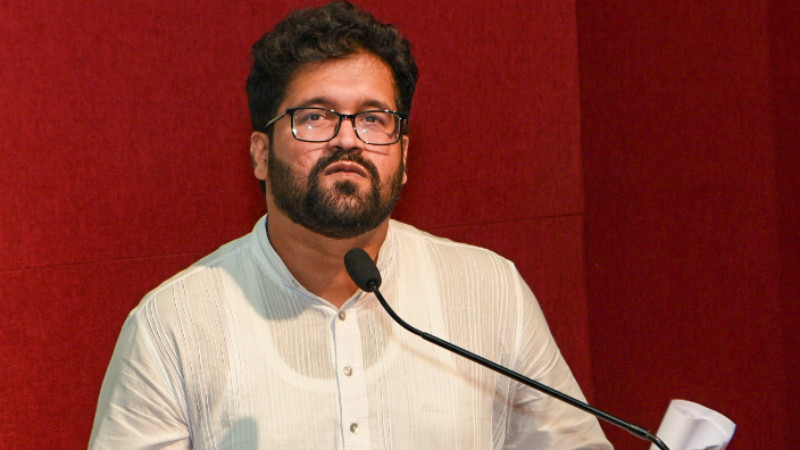
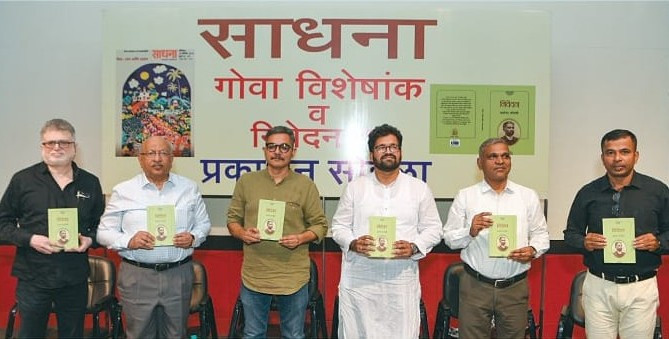
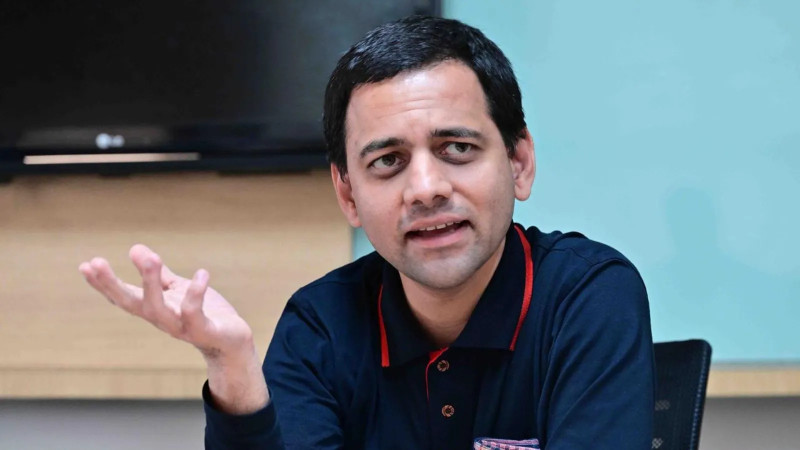
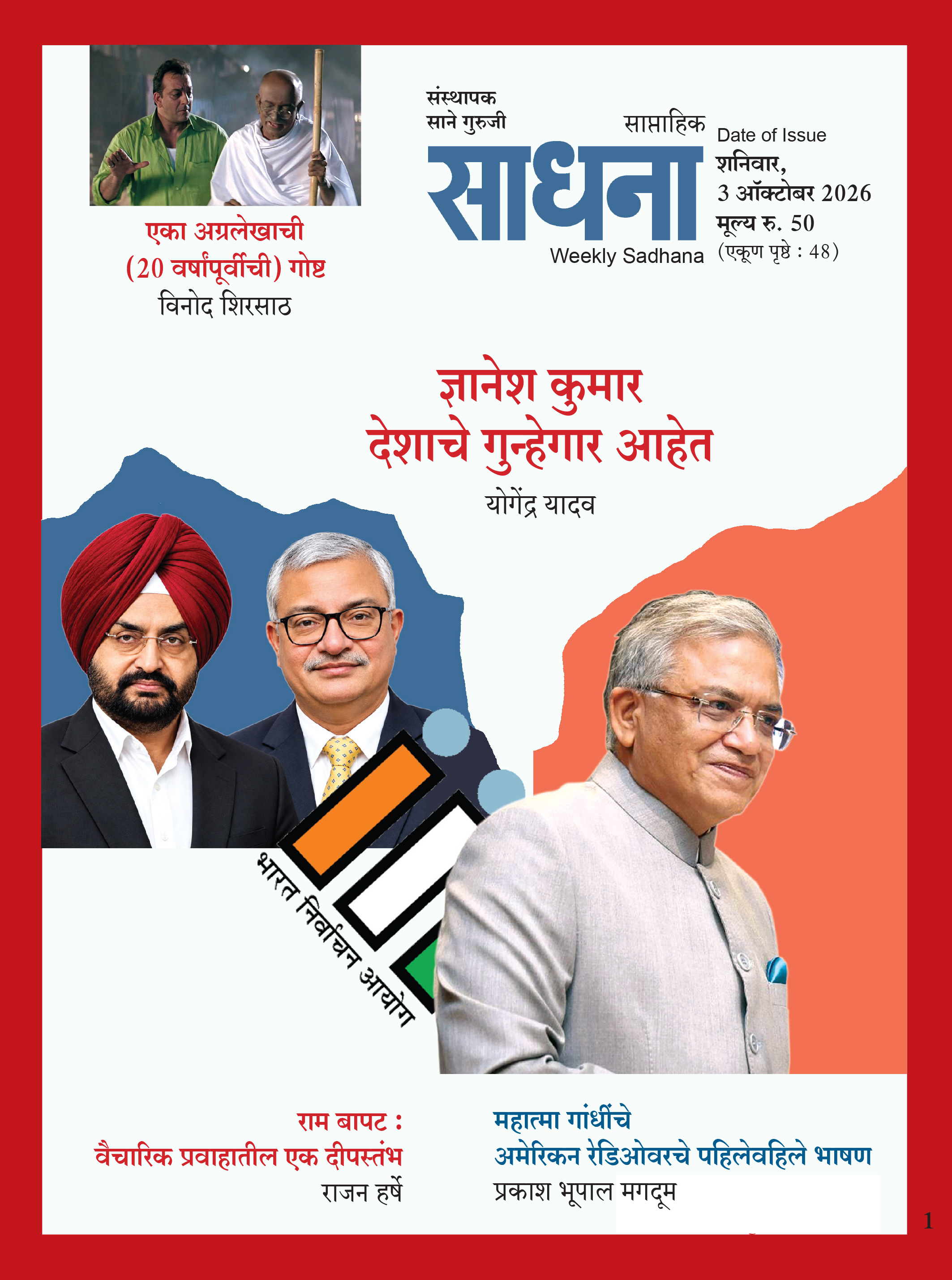
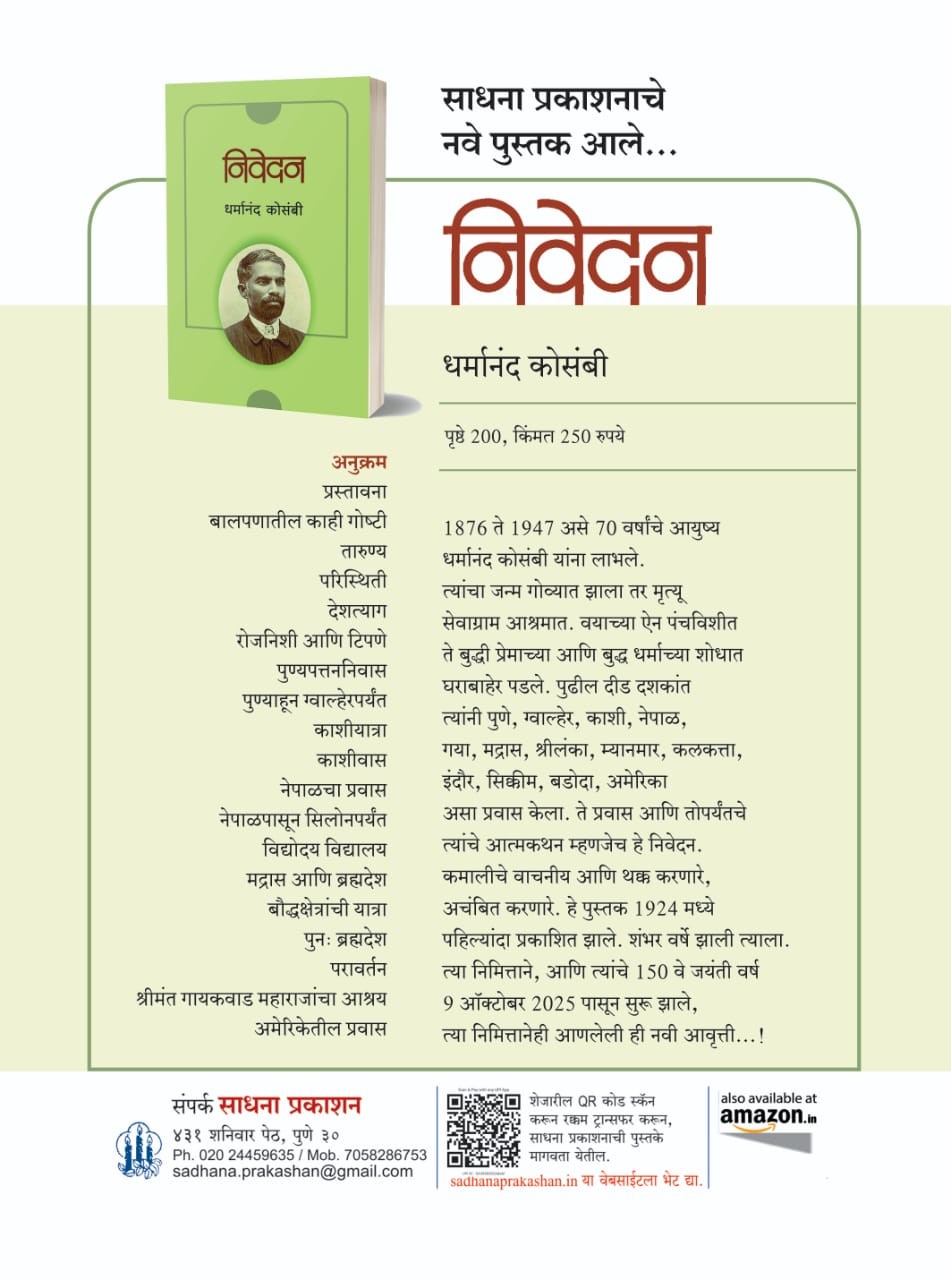
On the eve of the 64th Goa Liberation Day, (18 December 2025), the special issue of Sadhana weekly titled “Goa: Known and Unknown” was released at an event in Margao (Goa). At the same event, a new edition of the autobiographical book 'Nivedan' by Goa’s son Dharmanand Kosambi was released at the hands of *Dr Pranav Ajrekar*, a scholar of Buddhist philosophy. On this occasion, Ajrekar delivered a speech in English, explaining the unique importance of Nivedan, as well as Dharmanand Kosambi’s scholarship. We present the speech here.
It was in 2019, when Dr. A Semenkov from Vorenzh University invited me to submit something, anything pertaining to Buddhism. At the same time, I had just completed reading of English translation of Nivedana by Late Meera Kosambi. I abridged and condensed the work in form of article, adding few paragraphs of what I knew about Acharya Kosambi, and submitted it. It was selected and came out in February of 2020. I was informed by the peers, that they had never heard about Dharmananda Kosambi and that they knew only one Indian Buddhist scholar, with connection to Russia and that was Pandit Rahula Sankritayana. They did some digging at St. Petersburg University, Leningrad Academy of Sciences during Soviet times, and discovered the name in bold Cyrillic letters; Dharmanand Damodar Kosambi, Asst Prof of Pali and Buddhism, from March 1929 to February 1930.
Well that were Russians, but how much do we, as Indians, as Goans know about Dharmanada Kosambi?
Did we know that as a young man he was ostracised by society for standing tall for his ideals?
Did we know that at the age of 23 he had written a guideline for individuals and for Goans, as society and which still resonates for our time?
Did we know that he was the reason that Pali, the language of Buddhist scriptures, were introduced in academic stream?
Did we know he was the first Marxist from India, and tried to synthesis the virtues of Buddhism and Marxism?
Did we know that Dr. Babasaheb Ambedkar had been inspired by Kosambi’s theory on Buddha’s renunciation?”
And last but perhaps not the least, did anyone knew he had attempted to built a revolutionary institute?
Anyone who have read Nivedana before cannot but be impressed by his quest to seek knowledge despite the humiliation and deprivation he face on this journey. In Sutta Nipatta, There is a follower of Buddha, Punna Sunaprantaka. When Buddha asks him what would he do when the people will turn hostile towards him, abuse, torment even kill him? Punna answered still he will be great full towards them and hold on to Dhamma. Nivedana is the account of that very perseverance.
It is a tale of a pilgrim’s progress; a Brahmin boy, born and raised in Portuguese Goa where Buddhism had ceased to exist in word and stone, he journey’s to rediscover the wisdom of the ancient faith. Nivedana thus can by virtue of its contents and its author devotion deserves in place in long line of Buddhist pilgrim account from Fa Heins’s Record of Buddhist Kingdoms and Huen Stang’s Record of Western Regions, and Modern Buddhist Travelogue accounts besides Pandit Sankrityana’s “From Volga to Ganga.” Fa Heien and Huien Stang journeyed to India to bring Buddhism to China, Pandit Sankritayan and Acharya Kosambi journey out of India to bring back Buddhism to India.
Born as Dharma Sinai Lotlikar on October of 9th 1876, youngest of seven siblings. Reserve and thoughtful, he was plagued by ill health which continued to haunt him till end of his life. He was drawn to ideas of Sant Tukaram and Agarkar. A voracious reader he began forming his ideas about religion and society, rather than goose stepping into conventionalism. Through a magazine article, he was introduced to life of Buddha and His Dhamma. Somewhere inside him he was convinced that it was Buddha’s Dhamma that would provide him inner peace, which his parental faith failed to do, and decided to follow his calling.
When his brother in law Dr Shakharam Laad was excommunicated for crossing the seven seas, he refuse to severe his ties with him, and in return was himself excommunicated. In this, he shared the same fate as Mahatma Gandhi who was excommunicated from his caste for deciding to leave for London. So a misfit, fatherless (He had lost his father in 1898) financially in debt, a sickly child, ill-educated and now an outcaste. This led to him losing interest in social domestic life. Rather than be a burden to his family, he decides to leave his homeland. It is said when a person losses everything, he wins that freedom and will to achieve anything. With mind growing with seeds from Sant Tukaram’s gatha and watered by Buddha’s teaching, he decided to chalk out his own path, and like his idol Prince Siddhartha leaves his homeland in search of truth and wisdom.
He was 23 years when he left Goa. It is an age when individuals just start to develop a worldview, majority would inherit the worldview of his parents and forefathers, compliant with the status quo. But Dharmananda had formed his own worldview and finished it with perfection. The fifth chapter of Nivedana gives glimpse of his views concerning individuals and society at large, and answers to their ill. The letter is dated 1898 which begins with:
“Children, I intend leaving something when I am gone.” This was not only supposed to be his farewell letter, but inheritance. “I have absolutely no wealth, and so I am noting down for you my meagre experience of this world. I hope you will make good use of this.”
He is apprehensive that his nephews and daughter will not find good guardians.
1. “There is nothing dreadful as ignorance in this world. The acquisition of knowledge require a strong devotion to goddess of learning, no deity can be appeased without devotion.” And “The limit for acquiring knowledge is death; so do not stop until death.”
2. Learn a craft that tunes with your aptitude. Dharmanand himself had been victim of this. He desired to learn Sanskrit, but he’s father was not supportive of him. Never be idle.
3. Avoid Bad Company, before concluding, “I feel like telling you more; but there is no time. And advices the youngster to always take care of your parents.”
 The second letter is dated in the 1899. The earlier one was for his daughter and nephews, the second is for us Goans, as a society.
“Religion has close connection with human life closer than even politics can have.” It is in this letter for the first time he boldly states, “I have now become a Buddhist, at least in mind. I like the views of Lord Buddha. All who desire the welfare of the world, the nation, family and self should take refuge in Sadguru.”
Caste based discrimination and privileges should be totally eradicated. Child marriages should be abolished; Dharmananda himself had been a victim of child marriage.
“The System of Democracy is Good.” This was went half the world was reeling under colonialism. “Next comes Democratic Monarchy.” Or Constitutional Monarchy followed by indigenous monarch. And the worst is that which prevails in India, i.e colonialism.
What should individuals do?
Hold ones parents in respect when young, and as one grows begin discarding the irrational customs and superstation. Carry ones occupation without hurting. Never indulge in intoxicants, nor engage in business of liquor. If one already locked in wedlock, educate your younger wife.
One should take refuge in Sadguru Buddha and meditate upon his views. Thus the Son of Goa had diagnosed the ills of our society, and had already found the panacea: Buddha’s Dharma. . As years would pass, he views will evolve. He will be introduced to Socialism, Marxism, Gandhism but his ideological foundation based upon Buddha and Ahimsa will never be changed.
After his journey over the subcontinent from Goa to Pune to Nepal. From Nepal to Sri Lanka, where he was initiated as Shramaner and Myanmar, where he became a Bhikku, Dharmananda based himself in Calcutta, deciding to revive Buddhism in India. In 1906, he influenced the administration of newly established National College to introduce Pali course, and was appointed as teacher of Pali. In 1907, he was appointed as a reader of Pali at Calcutta University. He also helped the University in purchase of Pali texts from Burma. The same year, he decided to travel towards Himalayas. Having mastered Theravada in Ceylon and Burma, he now decided start research of Tibetan or Vajrayana Buddhism. He mastered the Tibetan script and headed towards Sikkim. Upon reaching Sikkim, he felt that the Dhamma was not religiously followed as in Burma and Sri Lanka. He was appalled at the sight of animals being slaughtered, and lifestyle of the people compelled him to drop the endeavour. From his writing in Nivedana, it can be deduced that he held negative view of Vajrayana Buddhism based experiences in Nepal and Sikkim. He had come to believe that Buddhism as practiced in the Himalaya had diverged from its source. Two decades later Pandit Rahula Sankrityayan had journeyed into Tibet via Ladakh, and that also in end of 1928, contributing in the field of Tibetology. I personally feel, Dharmananda had committed ‘academic suicide’ by letting his bias get over his zeal for Buddhism. In early 1900’s the field of Tibetology was still in its infancy. If Dharmananda had braved his bias and hills of Himalayas, today his name would have been known in wider circles of Buddhist studies, and Nivedana would had another brilliant chapter narrating his adventures beyond Himalayas.
In Dec. 1906 Srimant Sayajirao Gaikwad, The reformist king of Baroda arrived at Calcutta. Upon meeting with Dharmanada, he invited him to Baroda, where he delivered five lectures in presence of Srimant Sayajirao Gaikwad. Three of them had been published as a book under the title Buddha, Dharmanand ani Sangha.
In 1909 he translated a large portion of Vishuddhimagga into Marathi and named it Bodhicharyavtar. This gained him attention of Dr. James Wood, an Indologist, who invited him to Harvad University to work on translation project of Vissudhimagga began by late H.C.Warren. During his journey to U.S through Europe, Dharmananda was introduced and attracted towards various streams of Socialism; Fabianism, Marxism, Utopianism etc. From Harvard he published two lengthy articles pertaining to India’s indigenous socialism and plight of workers titled, “Oligarchic Republics of Vajji” Vajjinche Mahajanasattak Rajya, and “Measures for improving the Conditions of Indian Workers”, Hindi Kamagaranchi Sthiti Sudharanyas Upaya.
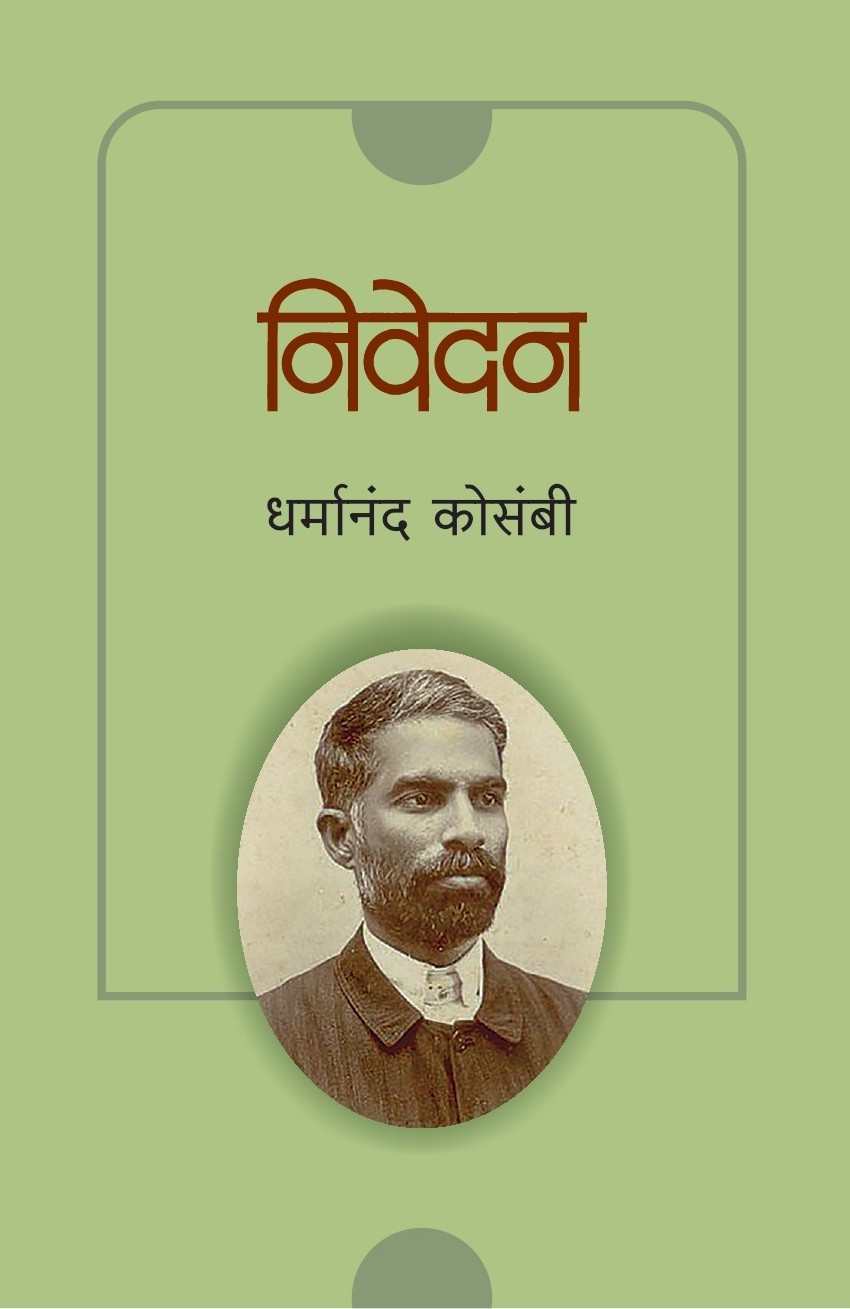 Nivedana, Kosambi’s autobiography ends here on his return from U.S.A. He missed many events of significance which he wasn’t aware himself. For example, In 1912 during the Vasant Vyakhyan Mala, Pune he delivered lecture titled ‘Karl Marx.’ Thus making him arguably the first person in Indian political history to link Buddhism and Marxist thought. Because this was before the Bolshevik stormed the Winter Palace in 1917, and foundation of Communist Party of India in 1924. Buddhism and Communism are stated to be conflicting ideologies, but due to the spark of genius, he was able to achieve synthesis between Marx and Buddha. Dharmanand’s inclination towards socialism/communism was due to its principle of equality, humanism and social change which was also close to Buddhist philosophy.
The Leningrad Academy of Sciences had started a centre for the study of Buddhist Culture. Dharmanand wrote to Prof. Fyodr Shcherbatsky. Prof. Shcherbatsky was impressed by his credentials, despite his ill education and invited him to Russia. Dharmanand left India for Russia on 3rd March 1929. In the Russia he got the job to teach Pãli in the Leningrad Academy of Sciences and Leningrad University. Dharmanand lived there for a year, and utilised his salary to travel throughout the Socialist republic. He had been familiar with works of Marx, and was deeply impressed how the Russian society had radically changed after 1917. True to his nature he couldn't resist absorbing the ideas of ascetic aristocrat from Yasnaya Polyana. “Good men like Count Lev Tolstoy fully support the principle of socialism both through the words of Christ and through their own behaviour.”
Dharmananda participated in India’s freedom struggle. He respected and followed Mahatma Gandhi. When Civil Disobedience Movement began Dharmanand participated in Salt Satyagraha at Shiroda in Konkan region. At Ville-Parle in Mumbai, he joined the underground Labour Movement. When Abulla Sheth, its leader was arrested Dharmananda took the leadership of the group. On 11 Oct. 1930 Dharmanand and his followers were arrested and he got one year imprisonment and sent to Thane Prison where he languished until 1931.
He visited U.S. for the last time in 1932 completing the Vissudhimaga and other Pali texts. In 1934, while residing at Kashi Vidyapeeth he completed a book ‘Hindi Sanskriti Ani Ahimsa,’ (Indian Civilisation and Non-Violence) published at the end of 1935.
In 1940-1941 he finished his magnum opus Bhagwan Buddh in two volumes. This book conveyed a matured view on Buddha’s life. Especially theories regarding his renunciation. Kosambi refused to believe that a Gautama, a Prince of 29, whose biological mother had died giving birth to him, was oblivious of suffering and death. He discovered the real cause of renunciation in Kunala Jataka, which mentions the conflict between Shakyas and Koliyas due to riparian rights over river Rohini. Gautama as Prince refused to take part in conflict instead chose to renounce his position as a prince. This theory also impressed Dr.B.R.Ambedkar and he included it in his book, “Buddha and His Dhamma.”
Kosambi had a dream of starting a Buddhist monastery cum university, which would be centre for dissemination of Buddhism in Maharashtra, and India. Having achieved a perfect synthesis between Buddhism and Marxism, he now wanted to practically apply his ideas on line of Lenin’s Vanguard and Gandhi’s mass movement. The epicentre of this movement would be the Bahujan Vihara. J.K.Birla played the role to Kosambi, what Anantpindaka played to Buddha. The Vihara became a Monastery of Revolution, on Sundays he gave sermons about Buddhism accompanied by Socialism, equality, education, eradication of casteism and untouchability, woman rights, trade unionism and freedom. Somehow the life of this peaceful Bhikkhu turned antagonistic due to his views on economic status quo, and religion. Being bold, he suffered antagonism. Birla expressed disagreement to most of his ideas. Kosambi had no choice, but disassociate himself from Bahujan Vihar.
After pondering about his life and works, Dharmanand thought that his role on this earth was over, and decided to commence Sallekhana (“Fast unto death”). Dharamanand awaited his death at Sevagram ashram. His death was as glorious as his life, he passed on 4th June 1947 at 2 p.m. Death didn't come to him, he invited. The Head of the Sevagram Asram, Balvant Sinha said, “Never had he seen a nobler and more serene death.” He was cremated on a small mound at 5 p.m. At his prayer meeting on 5th June at Delhi, Gandhiji paid his respects to Dharmanand Kosambi in these words, “who preferred to work silently in the background and never blew his own trumpet. May God inspire us all to walk in his footsteps.”
So what was it that made Dharmanand so much obsessed over Buddhism. The answer, according to his late granddaughter, is sila (virtue). The four brahmaviharas of Buddhism which are karuna, mudita, upeksha. There are two interrelated concept in Indic philosophy; Pratima and Pratibha. One which we all do, whether Hindu, Buddhist Christian, it represent the symbolic form. Visiting temple or church. Offering flowers or lighting candles. Pratibha is the ideal. How one practically applied the teachings of Buddha, Jesus or Krsna in one’s life. Majority of us falter in the application of those teacher. Dharmananda Kosambi had applied the ideals of Buddhism in word, thought and deed and had transcended every mundane obstacle to follow, and finally be one with his Goal, Nirvana.
- Pranav Azrenkar
pranavazrencar@gmail.com
(Author is an Expert Scholar of Buddhist Philosophy.)
(या भाषणाचा मराठी अनुवाद साधना साप्ताहिकाच्या 3 जानेवारी 2025 च्या अंकात वाचता येईल.)
You can buy the book Nivedan by Dharmanand Kosambi here
.jpeg)
Tags: nivedan dharmanand kosambi damodar kosambi mira kosambi buddhism buddhist philosophy autobiography goa book launch sadhana prakashan new book sadhana prakashan sadhana digital धर्मानंद कोसंबी आत्मचरित्र आत्मकथन बौद्ध धर्म आणि तत्त्वज्ञान बौद्ध तत्त्वज्ञान बौद्ध धर्म प्रवास अभ्यास प्रणव आजरेकर Load More Tags




Add Comment