
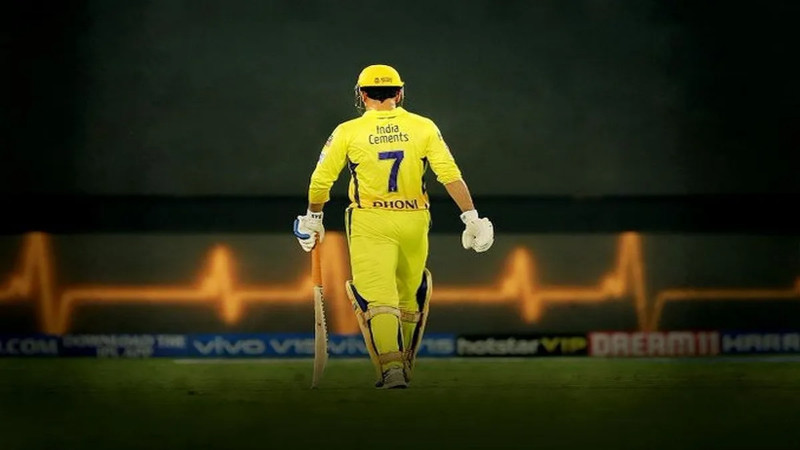
After 90 Test matches, 350 One-Day Internationals, and 98 T20Is—almost all behind the stumps—with 634 catches, 195 stumpings, and 17,266 runs in international cricket while managing the team as the captain and winning every possible ICC World Cricket title, Mahendra Singh Dhoni officially retired from international cricket in August 2020. His legacy extended seamlessly into the franchise arena: across 19 seasons in the Indian Premier League, he featured in 278 matches, amassed 5,439 runs, and captained the Chennai Super Kings to a joint-record five IPL titles before officially retiring from the tournament in this month. These stats are nothing short of mind-boggling, yet they do not reveal the entire story of Dhoni's era. To understand Dhoni's impact on Indian cricket, one needs a careful review not only of him as a player, but also as a leader.
Dhoni's selection as captain of the Indian team brought significant changes to the mindset of the players, the management, and the viewers. His appointment as captain was definitely the most surprising element of that time. He was the least tried-and-tested captain for the Indian national team, with the possible exception of Azharuddin. This time, however, it was not as casual a selection as then -chief selector Raj Singh Dungarpur asking Azhar, "Kyo miya, captain banoge?" Dhoni's acumen was keenly observed from the slip cordon by Tendulkar, who recommended him when he himself was asked to lead. At least Azharuddin was already a successful batsman when named captain, whereas Dhoni had yet to prove his mettle even as a player when he was asked to take the helm. Dhoni did not disappoint either the selectors or the viewers, lifting the T20 World Cup. His success was even more emblematic of his confidence given that he lifted the trophy without any of the stalwarts in the team—and the rest, as they say, is history.
From there on, Dhoni's graph as both a player and a captain improved by leaps and bounds. His playing skills never really came from any traditional cricketing school. His batting style, and even his wicket-keeping skills, were laced with more street-smarts than typical bookish techniques. Dhoni is possibly the only player who truly rose from the grassroots to become the leader of the pack in such a short span. Yes, Kapil Dev was one such exception, though even Kapil had to prove himself as a bowler and all-rounder before being considered as a leader of the team. Playing cricket on the streets of cities and towns brought unique skill sets to several Indian players. Be it VVS Laxman's ability to play the same delivery to both the on and off sides of the wicket, or a Mumbai resident's ability to play a straight drive to any possible delivery—all have roots in gully-cricket rules and their rewards. Dhoni was no exception to that. His involvement in local tennis-ball cricket tournaments, where every ball was meant to be hit out of the park, proved crucial later in his cricketing life, especially after embarking on the state and national levels. While it was evident that his powerful shot-making skills were honed on the streets of Bihar (now Jharkhand), his leadership skills must also have been influenced by dealing with adversities on those very streets.
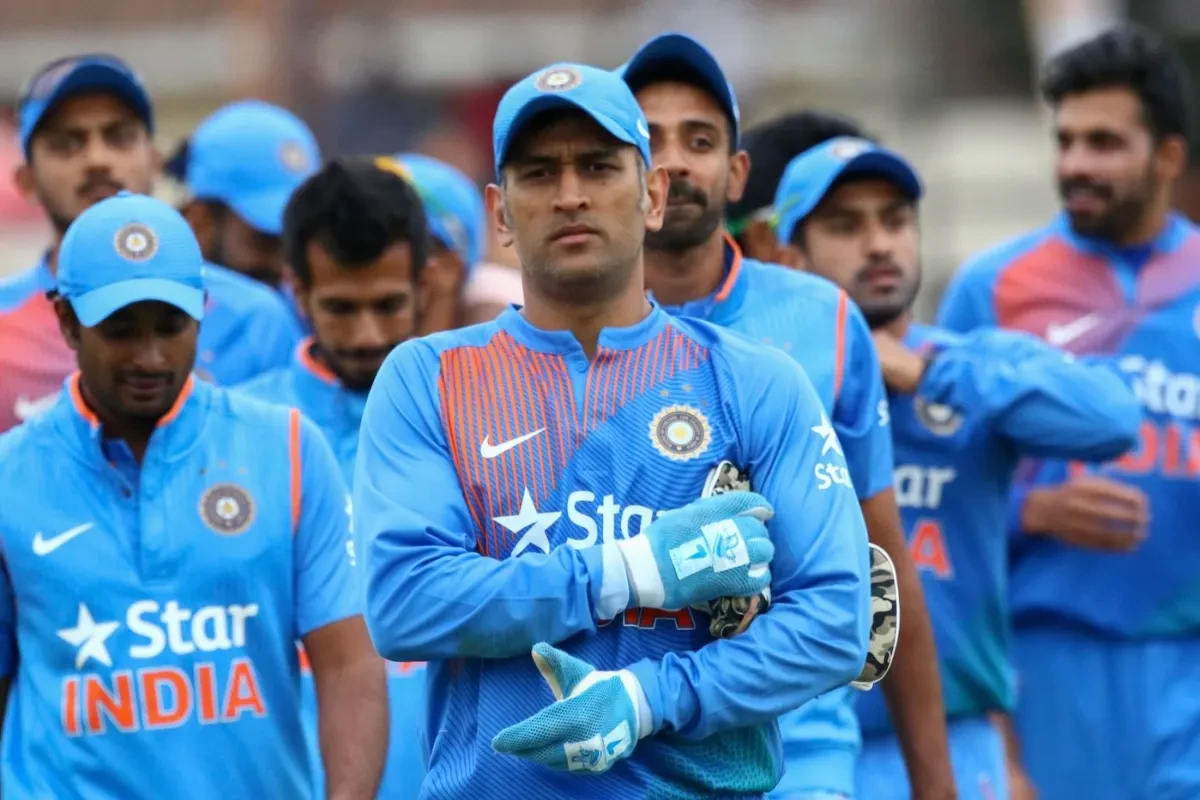 One of his unique abilities as a leader was to show no emotion and use his body language to intimidate opponents. Much of his work behind the stumps showed how supremely aware he was of his surroundings, and many of his last-over finishes as a batsman can be attributed to the body language of a winner—and, indeed, his ability to back it up with superb big-hitting skills. During his tenure, Mahendra Singh Dhoni taught Indian cricket viewers to be patient until the very last ball. He truly convinced us that needing more runs off fewer remaining balls is not always a challenge just for the batter, but equally for the bowler; in fact, he made sure it was more difficult for the bowler. In many ways, it would not be an exaggeration to say that by the peak of his career, the cliché "cool as a cucumber" had earned a synonym: being Dhoni.
Dhoni proved to be a superb tactician—on the field, but even more often off it. As captain, his management began with handling the "Fabulous Four"—Tendulkar, Ganguly, Dravid, and Laxman—navigating their egos and the natural intimidation they brought with their stellar careers. At the same time, he had to manage the exuberance of the waiting-in-line-for-the-leadership cadre of Sehwag, Gambhir, Harbhajan Singh, and Yuvraj Singh. Almost all these individuals carried a "been there, done that" pedigree, and several were aiming for the highest post in the team. Dhoni’s coolness lay in managing the stalwarts by setting expectations off the field (possibly with selectors as mediators) while inspiring the young guns on the field—and yes, scoring runs and keeping wickets in the meantime. Dhoni had all three established powerhouses of Indian cricket—Mumbai, Karnataka, and Bengal—playing under him at the same time, while he was not remotely from any of these traditional foundations. A fascinating aspect of his personality was his refusal to be overly influenced by his surroundings. Being from a small town did not deter him from calling his own shots. After all, small-town boys are not afraid of taking risks or challenging the status quo—and, more importantly, they have nothing to lose.
Dhoni's management style is something to learn from. In a culture where age was often equated with wisdom, his respect for seniors never overshadowed his responsibilities toward team goals. His affection and respect for seniors—often calling Laxman Lacchu-pa and Sehwag Viru-pa—never left him dithering before tough decisions when these greats no longer fit into his scheme of things.
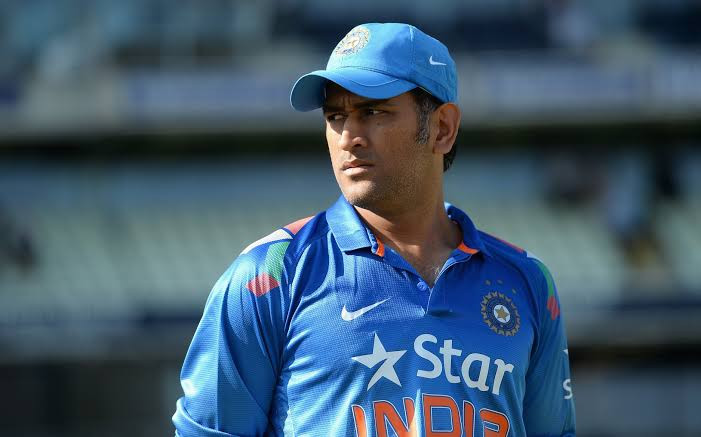 It was rumored that Laxman kept searching for him the entire day before his retirement announcement, unable to reach him by phone. Some call it a ploy or arrogance, but when it is time to build a team, one must avoid emotionally charged situations. And in this day and age, where connectivity is at everyone's fingertips, he somehow managed to remain unreachable. Conversely, his lovely gesture of letting Sourav Ganguly lead for the final few overs in his last Test, and the guard of honor conceptualized for Sachin Tendulkar's grand finale, showed immense emotion toward these players. His plan to use the "Fab Five" to the best of their utility in suitable formats and phase them out at the appropriate time bore a dramatic resemblance to Michael Corleone (Godfather) settling the score with the heads of all five families on the same day (minus the brutality, of course). It was the need of the hour, and his personal respect never came between his responsibilities toward the game and the goals of the team.
It is said that Sunil Gavaskar brought the winds of professionalism to Indian cricket, introducing customs like sharing Man-of-the-Match prize money among team members. Yet for ages, Indian captains had always remained the center of attraction—especially in moments of triumph. Dhoni introduced the tradition of bringing the newest member of the team into the limelight during trophy presentations while staying aloof himself. His grace was especially apparent in the 2011 World Cup post-match ceremony, where he graciously allowed it to be Tendulkar's event. Oftentimes, Dhoni proved with every squad he led that the true strength of the wolf was the pack itself where strength of that pack was indeed this wolf named Mahendra Singh Dhoni.
 Dhoni appeared detached from the game even while standing at its pinnacle. His unconventional style of leading—whether dropping his wicket-keeping gloves to bowl himself or employing an 8-1 field setting to control the opponent's run-scoring—was a sign of supreme confidence. More importantly, he never tried to cash in on this confidence off the field, either with traditional media or on social media. He appeared to hang up his boots every evening and don them again the next day.
All of his leadership skills are directly applicable to the corporate world, where one routinely faces adversaries, competition, and the responsibility of extracting peak performance from both young and experienced team members. The corporate leadership landscape is also growing younger with every passing year, and its protégés have much to learn from Dhoni's career as a leader.
In many ways, Sourav Ganguly started the dashing saga of leadership in Indian cricket, and Dhoni perfected it over nearly two decades. With Dhoni officially hanging up his IPL boots today, the franchise has wisely refused to let ‘thala’ walk out the door and appointed him as Chennai Super Kings' team mentor.
Do Watch: Leadership Lessons Ft. M S Dhoni (Official YouTube Channel of Chennai Super Kings )
Yet his influence shouldn't remain confined to franchise cricket—it would be a shame if the BCCI wasted this opportunity to utilize Dhoni’s presence on national duty as well. He has already stepped in to guide India during the 2021 T20 World Cup, bringing his calm, street-smart acumen back into the national setup would ensure that the next generation of Indian players benefits directly from his wisdom, building an even deeper leadership bench for Indian cricket.
- Salil Joshi
salilsudhirjoshi@gmail.com
(Salil Joshi is based in Boston, USA, and works in the field of information technology. He writes on political and social topics.)
Tags: Mahi Captain Cool Dhoni Cricket IPL T20 ICC BCCI Internation Cricket Wickekeeper Wicketkeeping Captain World Cup World Title Winner Dhoni Review System DRS Helicopter Shot Hair Fashion Bike Retirement thala whistle podu #whistlepodu CSK Chennai Super Kings Load More Tags



Add Comment